Multisig Security Habits That Actually Matter
Learn the multisig security habits that matter, from dedicated signing devices and quorum checks to transaction verification, recovery planning, and Safe reviews.

A multisig fails less often because of its code and more often because of a habit nobody wrote down. Most of what keeps a treasury safe happens before and after the signing screen, not inside it. Here are the habits that actually hold up, and where tooling can carry part of the weight.
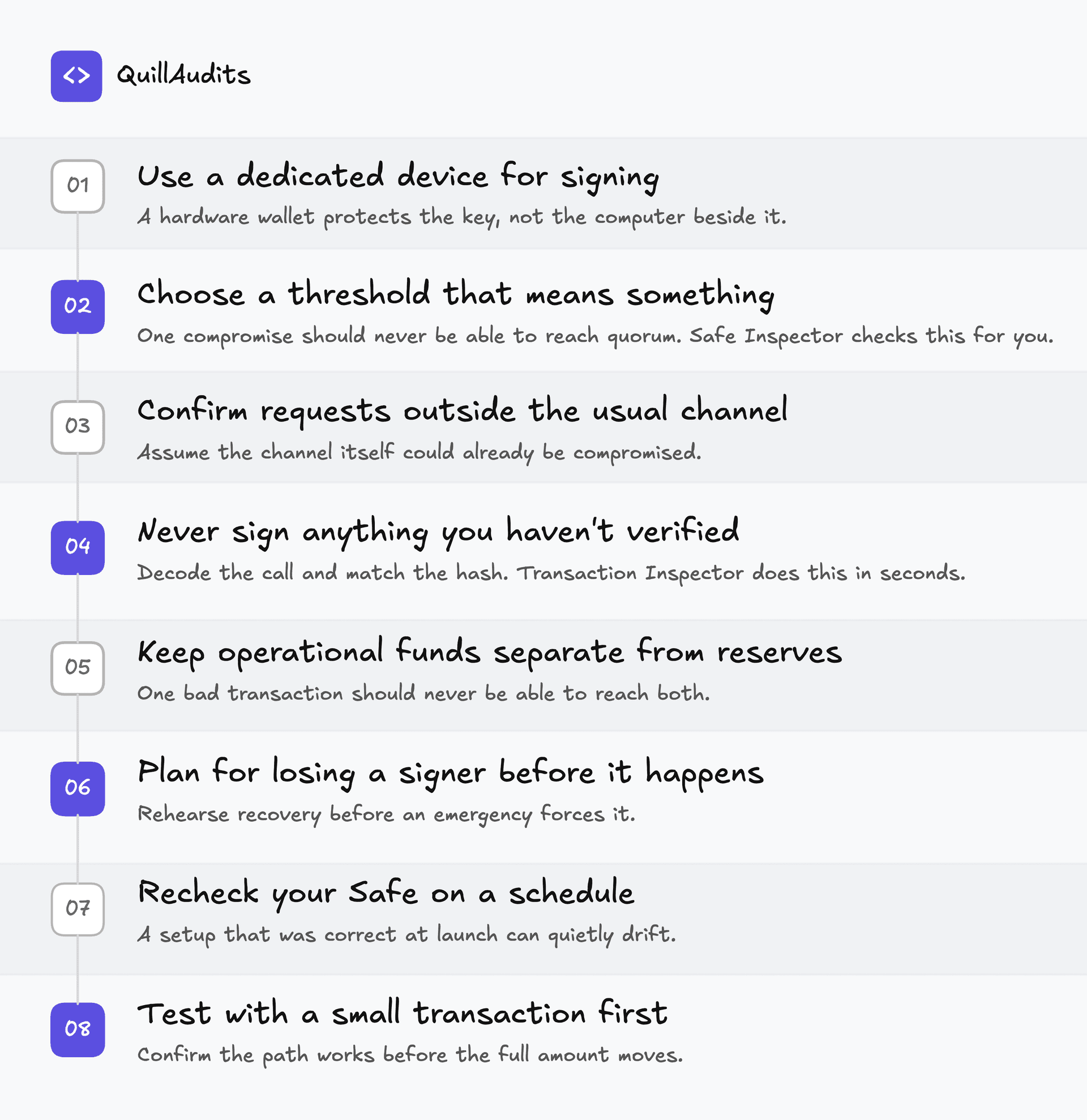
Use a dedicated device for signing
A hardware wallet protects the key. It does not protect the computer that built the transaction in the first place. If that computer browses the web, checks email, or runs random code, a compromised machine can hand your hardware wallet a payload that looks fine and isn't. Keep signing on a device that does nothing else, and treat that rule as non-negotiable even when it's inconvenient.
Choose a threshold that means something
A 3-of-5 with five independent people, devices, and recovery paths is a real multisig. A 3-of-5 where two signers share a laptop or a recovery phrase is not, no matter what the dashboard says. The test is simple: could one compromise reach quorum on its own. If yes, the threshold is decorative. This is exactly the kind of gap Safe Inspector surfaces when it reads back your current owners and threshold, since a setup that was strong on paper can quietly stop being strong in practice.
Confirm requests outside the usual channel
Assume the channel a request arrived on could be compromised. A message asking you to approve something should get confirmed through a second, already-trusted channel before you act on it, especially for anything material. Audio and video aren't a safe substitute for this anymore. Both are cheap to fake now, and a convincing fake only has to work once.
Never sign anything you haven't verified yourself
Trusting a frontend is how blind signing happens. Every signer should independently check the chain, the target contract, the value, and the decoded action before approving, then recompute the transaction hash locally and match it against what the hardware wallet shows. This is exactly the gap Transaction Inspector is built to close: decode the call, verify the hash, know what you're actually approving before you commit to it.
Keep operational funds separate from reserves
If day-to-day funds and long-term reserves sit behind the same approval path, one bad transaction can reach both. Segmenting them, with withdrawal limits, timelocks, and allowlists on the operational side, means a mistake stays a mistake instead of becoming a full loss.
Plan for losing a signer before it happens
Seed backups belong offline, on something durable, stored somewhere secure. Signer replacement should be rehearsed before it's needed, not figured out during an emergency, and whatever the recovery process is, it should never require dropping below quorum to execute. It also helps to know your current owner list cold. Safe Inspector's owner review exists for exactly that moment, confirming who can still approve before you're relying on that answer under pressure.
Recheck your Safe on a schedule, not just once
A configuration that was correct at launch doesn't stay correct on its own. Owners leave, modules get added and forgotten, and none of it announces itself. Treat a Safe scan the way you'd treat any other recurring security check, not a one-time setup step, and run it on a schedule regardless of whether anything feels wrong.
Test with a small transaction first
Before the full amount moves, send a small amount through the same path and confirm every signer can actually sign and the threshold behaves as expected. Stay alert to address poisoning during this step. A test transfer is also a signal to anyone watching that a larger one is coming.
Where Multisig Inspector Fits In
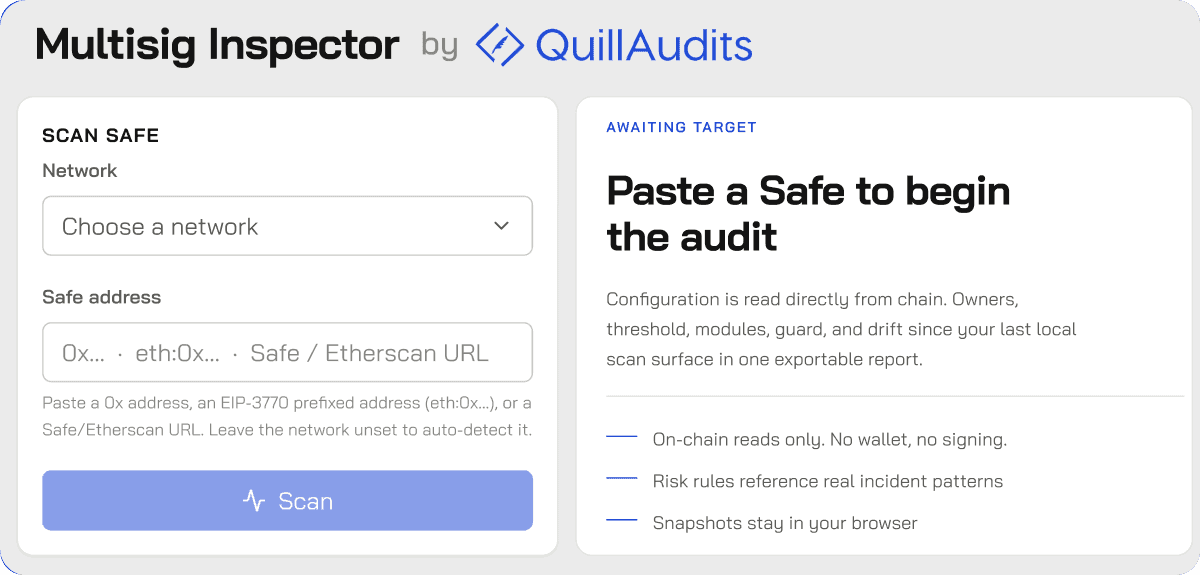
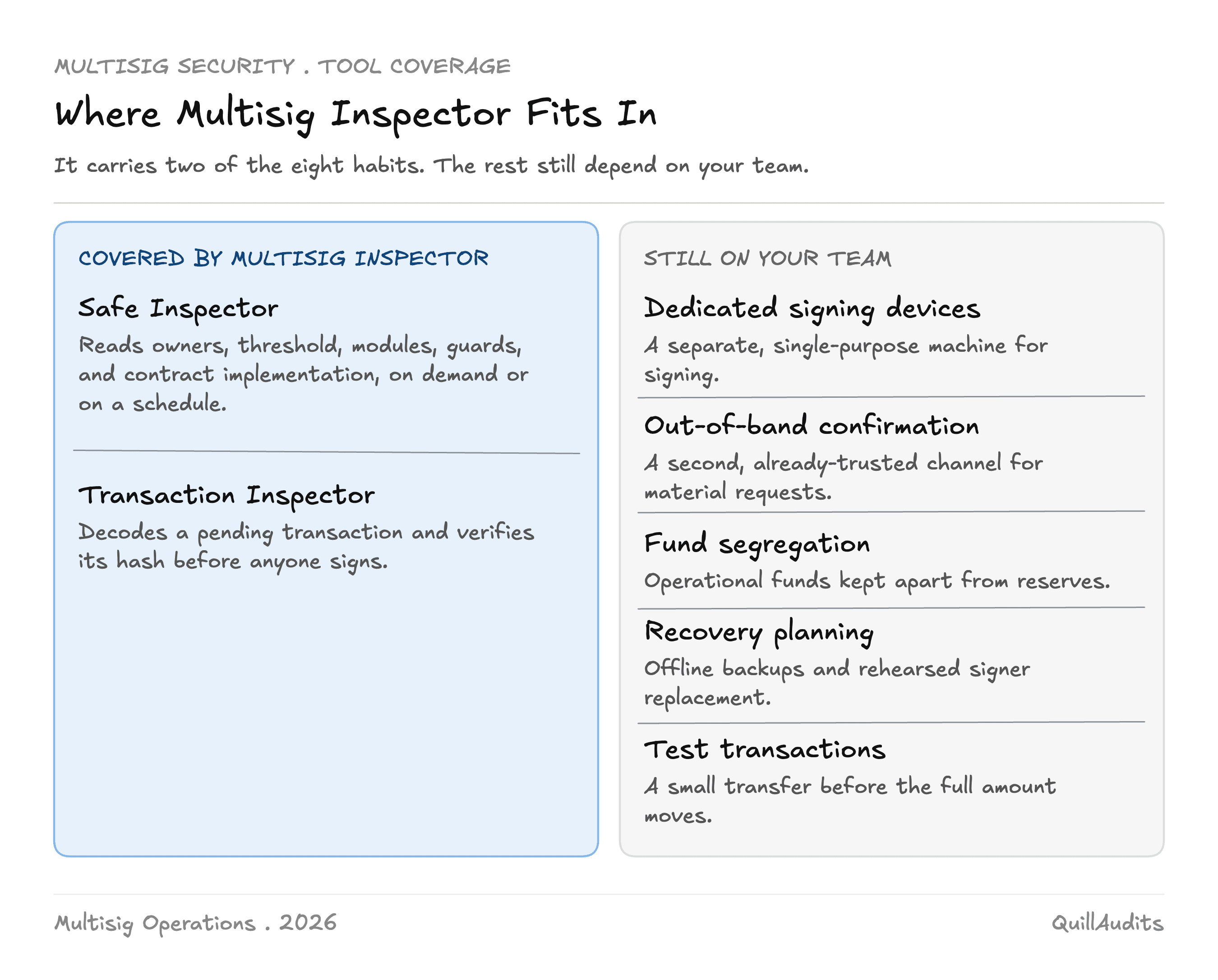
Multisig Inspector covers two of these habits directly. Safe Inspector reads your current owners, threshold, modules, guards, and contract implementation, so a setup that's drifted since launch doesn't go unnoticed. Transaction Inspector decodes a pending transaction and verifies its hash before anyone signs, so blind signing stops being the default.
It doesn't replace the habits around dedicated devices, out-of-band confirmation, fund segregation, recovery planning, or test transactions. Those still depend on the team doing them. What it does is make the two habits that take the most technical effort, checking configuration and verifying a transaction, fast enough that teams actually keep doing them. Try it at Multisig Inspector.
Conclusion
None of this requires new tooling to start today. It requires treating operational security as ongoing, not a one-time setup task you finish and forget. Safe Inspector and Transaction Inspector exist to make two of these habits, checking configuration and verifying transactions, fast enough that teams actually keep doing them.

Contents