Coinbase's oracle freezes on weekends. Your risk doesn't.
Chainlink prices Coinbase's tokenized stocks on Base using a multiplier-adjusted feed that freezes on weekends. See the full breakdown for DeFi builders.

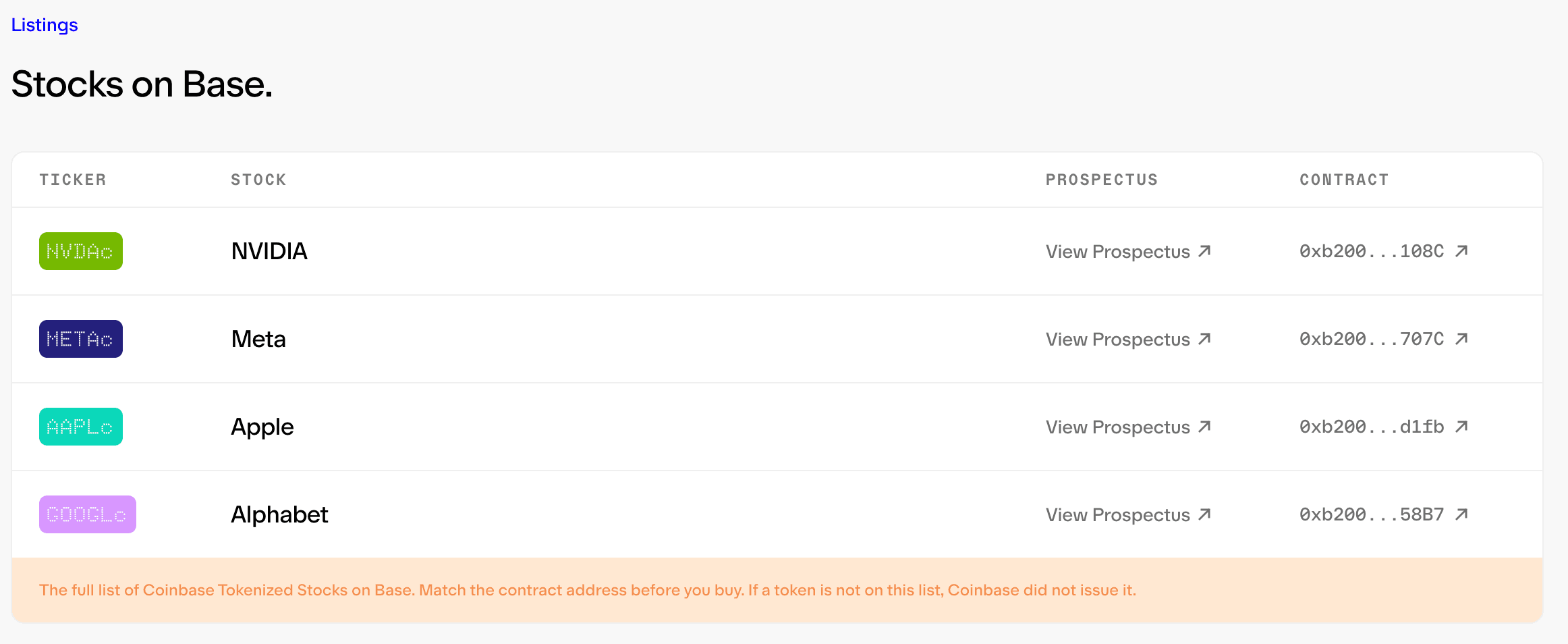
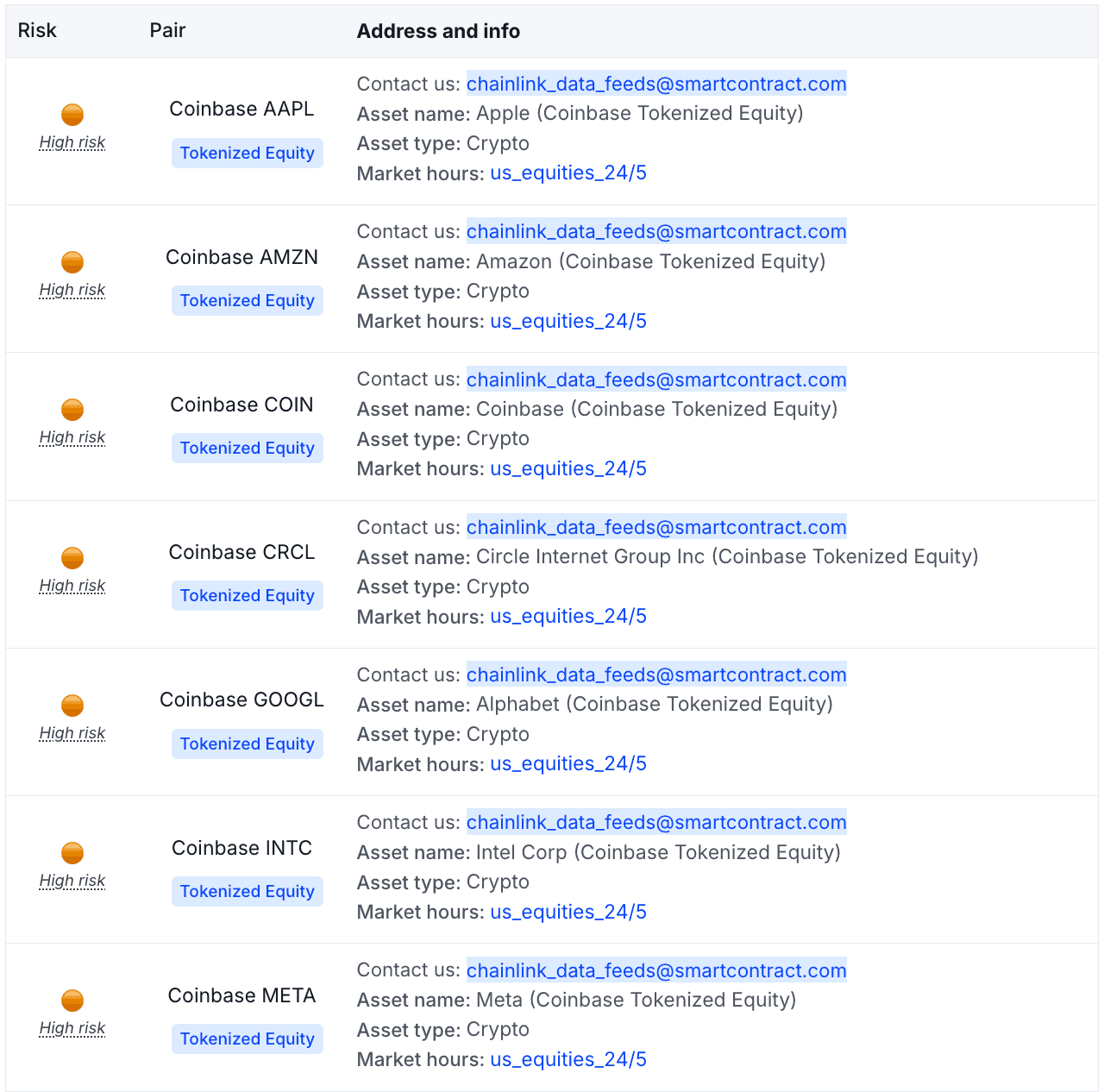
On August 24, Coinbase put four tokenized US stocks live on Base. Thirteen tickers, backed by real shares, trading around the clock: AAPLc, AMZNc, COINc, CRCLc, GOOGLc, INTCc, METAc, MSFTc, MSTRc, NVDAc, SNDKc, SPCXc, TSLAc. Alpaca holds the actual stock in custody. Each token is a direct claim on a real share. Buy the token, and you own a piece of Apple or Nvidia, and you can move it, borrow against it, or trade it at 3am on a Sunday.
Wall Street closes on weekends. Your wallet doesn't. So what happens to the price in between?
Coinbase's answer was to bring in Chainlink. Once you look at how that pricing actually works, it becomes clear this isn't a single price feed. It's several parts working together, and each part can fail in a different way.
Why the stock price alone isn't enough
Say Apple pays a dividend. In a normal brokerage account, cash lands in your account. On Base, nothing lands anywhere. Coinbase reinvests that dividend into more of the underlying share on your behalf. Your token balance in your wallet doesn't change. What changes is how much stock each token is worth.
That keeps the token itself simple, but it creates a problem for anyone building on top of it. If a protocol reads token price as current stock price, it never accounts for that adjustment. Multiply that gap across every lending market and LP built on the token, and a small accounting error in one place becomes a systemic one everywhere else.
Coinbase built a second layer to handle this, and understanding that layer is the point of this post.
Three parts that combine into one number
Chainlink already runs 24/5 equity price feeds. These blend regular trading hours, pre-market, post-market, and overnight data into one continuous market price for the actual stock. This part isn't new, it's Chainlink's existing infrastructure.
The new piece sits next to it: Coinbase's own on-chain multiplier registry. Every token carries a multiplier, a precise number representing how much of the real share one token is currently redeemable for. One token doesn't permanently equal one share, it equals the multiplier's worth of a share. The same registry also carries a pause flag, and both values come back from a single on-chain call.
Combine those two, and you get the number your contract actually reads:
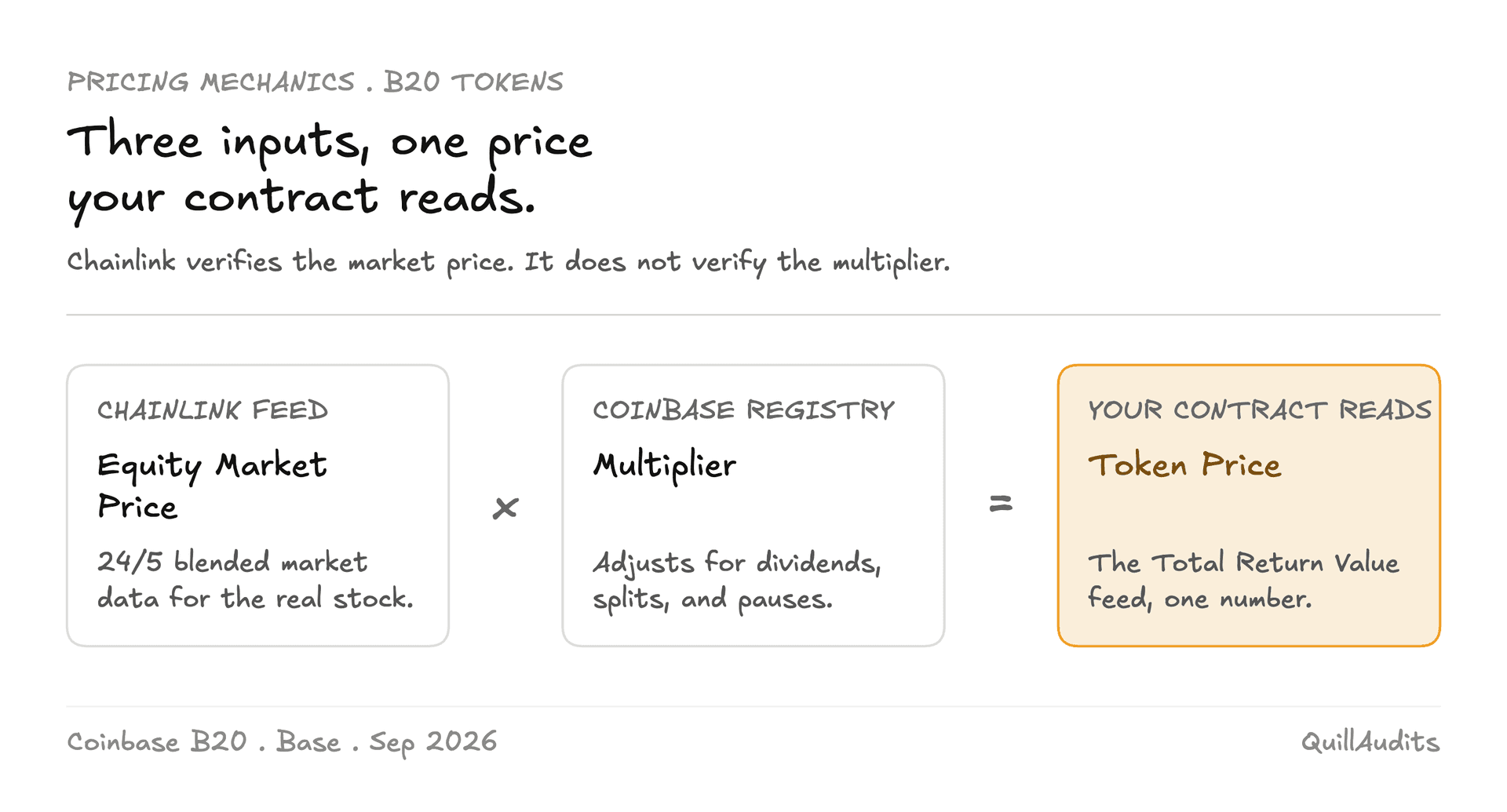
It looks like an ordinary Chainlink feed and behaves like one through latestRoundData(). But underneath, it's two separate inputs stitched into one number. The market price comes from Chainlink. The multiplier comes from Coinbase. Chainlink reports that multiplier faithfully, but doesn't independently verify it. So the trust assumption here isn't just trust Chainlink. It's trust Chainlink to correctly report a number that Coinbase controls. That distinction matters for anyone doing a security review of this system.
What happens during a corporate action
Dividends move the multiplier up slightly, something like 1.00 to 1.02. A 10:1 split moves it from 1.0 to 10.0. A reverse split moves it back down. A spin-off adjusts it to reflect whatever new asset results.
None of these events change your token balance. They change what your balance is worth. The part that requires real care is timing. A stock split doesn't update instantly across two separate systems. The market price updates on one schedule. Coinbase's multiplier updates on another. If the two drift even briefly, the token's reported price becomes inaccurate. So before a corporate action executes, Coinbase pauses the registry. The feed freezes at its last known value and waits.
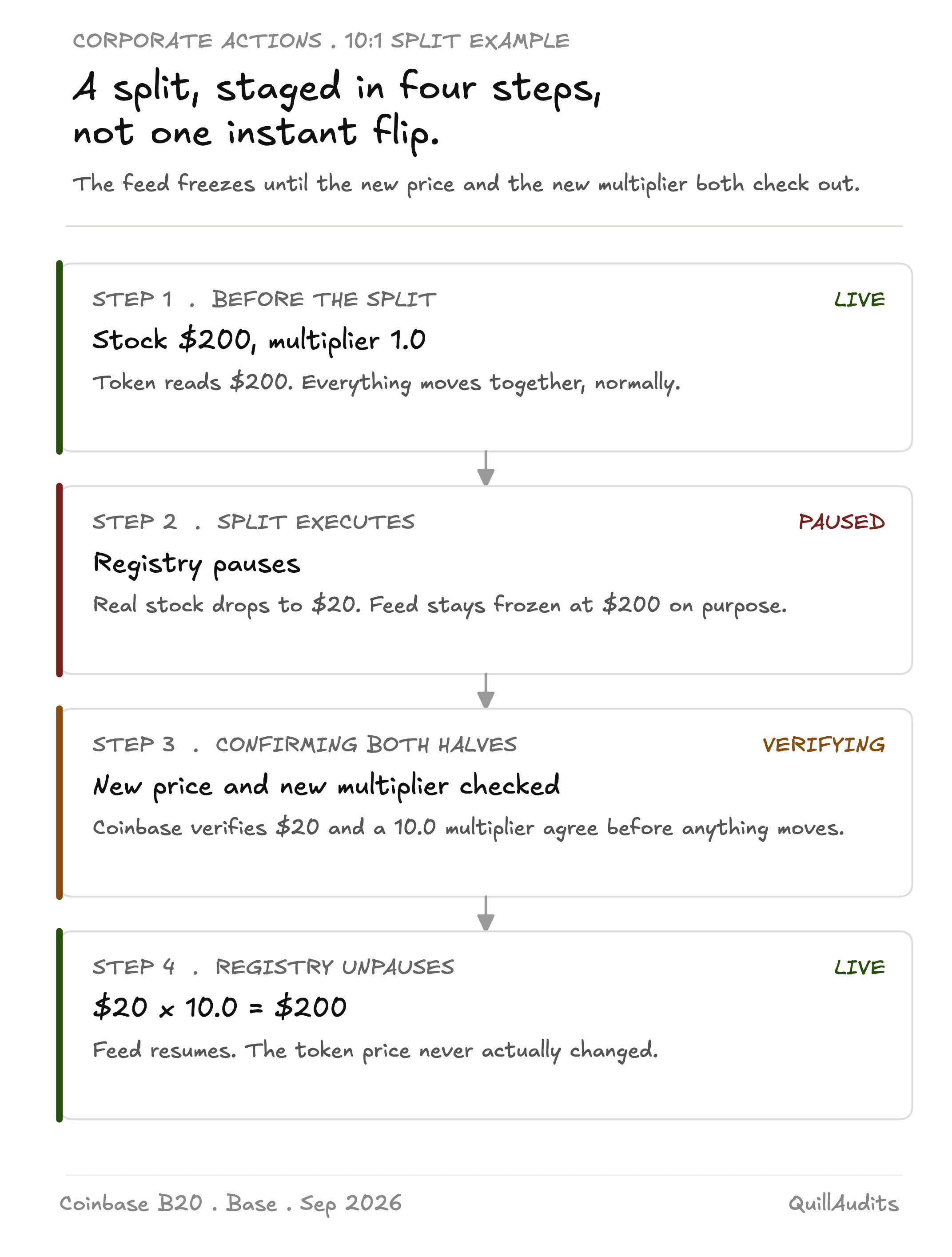
Take a 10:1 split as an example. Before the split, the stock trades at $200 and the multiplier is 1.0, so the token also reads $200. The split executes and the real stock now trades at $20, but the feed doesn't move yet, it stays paused at $200. Only once Coinbase confirms both the new stock price and the new multiplier are correct does it unpause. The multiplier updates to 10.0, and $20 times 10 gives $200 again. The token price never actually changed. It paused briefly while the two inputs caught up with each other. If the stock price updates before the multiplier does, the feed stays frozen rather than publish a number built from mismatched inputs. This is a careful design, and it's also a dependency: correctness here relies on Coinbase pausing and unpausing at the right moments.
The weekend gap
Corporate actions are rare. Weekends happen every week.
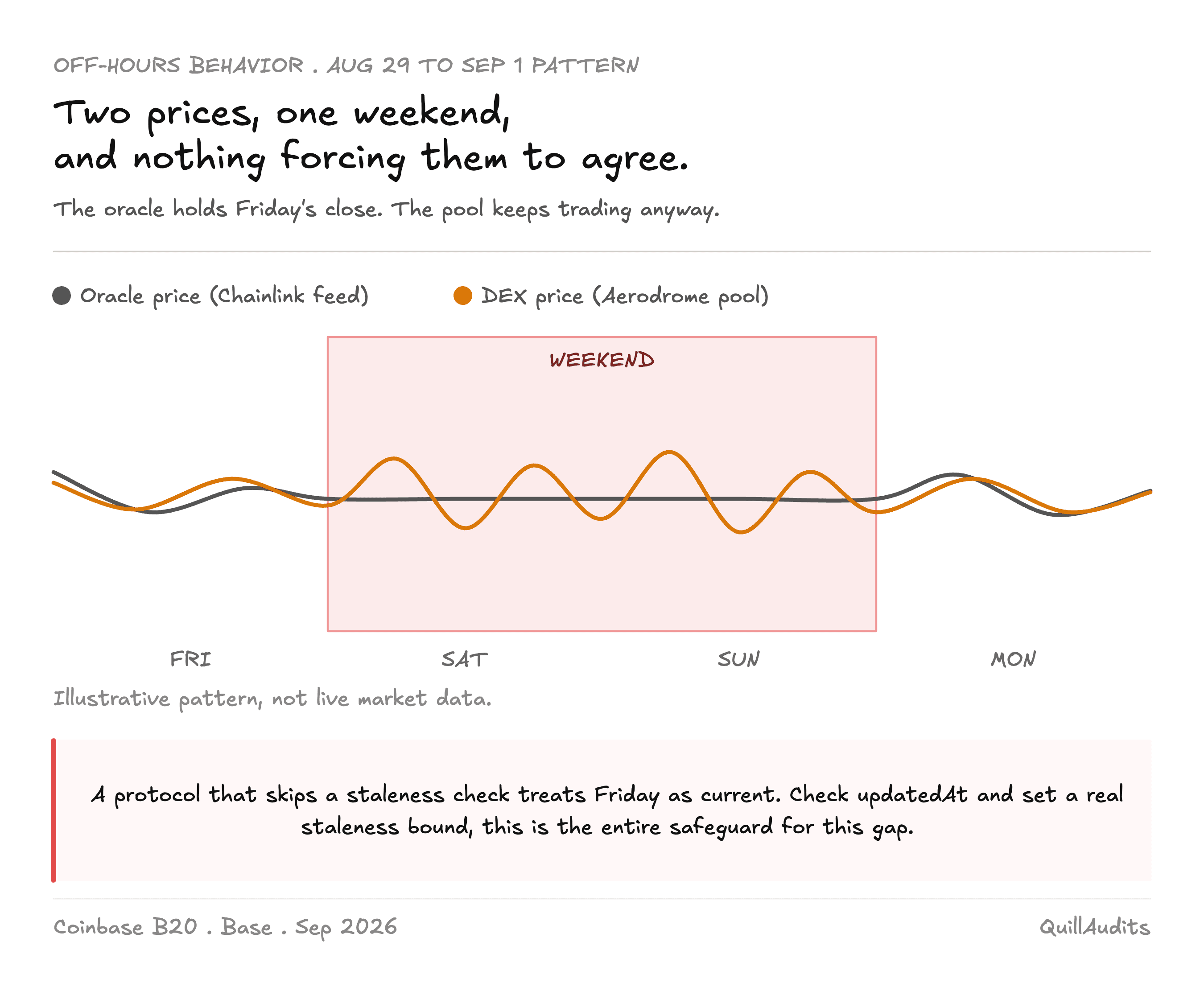
The equity price feed only has real market data five days a week. Outside market hours, weekends and holidays included, the feed holds its last close. Chainlink states this directly: there's no heartbeat during off-hours. The contract still responds when called. It just isn't returning a new value.
Aerodrome, meanwhile, doesn't know or care that it's Saturday. The AMM keeps pricing the token off whatever's actually trading, on whatever liquidity is in the pool at that hour. So for two days out of every week, two prices exist for the same token: a live one moving on the DEX, and a frozen one sitting in the oracle. Nothing requires them to match.
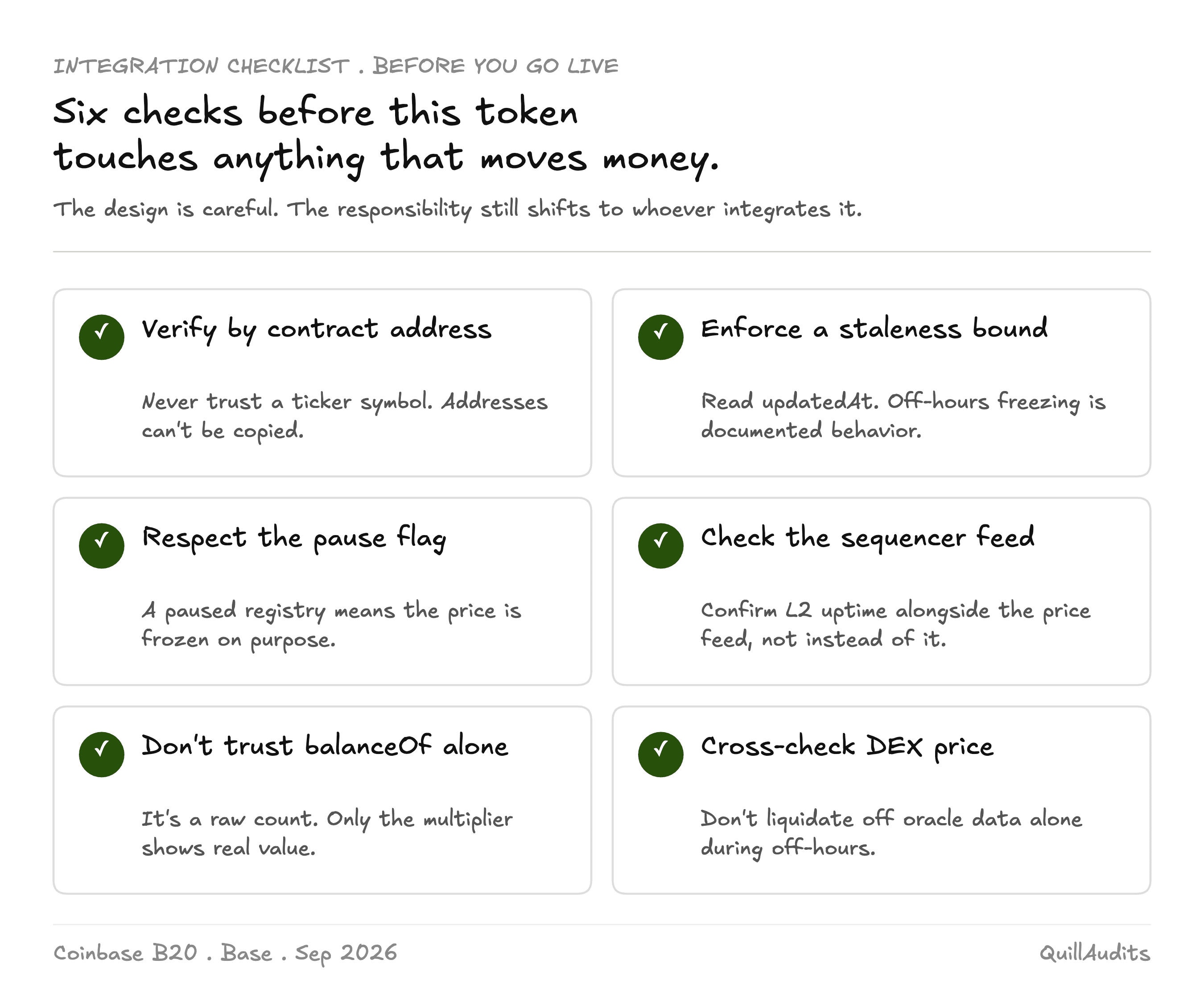
If a protocol reads that oracle price to value collateral or trigger a liquidation, and doesn't check how stale the number is, it will treat Friday afternoon's price as current straight through Sunday night, next to a DEX pool that has already moved. The fix is straightforward: read the feed's updatedAt timestamp and set a staleness bound appropriate to the use case. That check is the main safeguard for this gap.
The sequencer dependency
Base is an L2, which adds its own failure mode. Chainlink's standard guidance for any L2 applies here too: check the sequencer uptime feed before trusting a price. If the sequencer goes down, prices on Base can go stale in a way that looks identical to a normal weekend freeze. A protocol that only checks the price feed has no way to distinguish the market is closed from the chain itself has a problem.
What this means for integrators
The pause mechanism and the on-chain event logging show real thought. The risk is thecomplexity, and complexity is what gets missed when a team is moving quickly to integrate a new collateral type.
Before integrating one of these tokens into anything that touches money:
The ticker was the announcement. The pricing stack, the equity feed, the multiplier registry, and the calculation combining them, is the product. Account for the weekend before extending credit against it.
Conclusion
Coinbase built a system that handles corporate actions and off-hours gaps with real care. What remains isn't a flaw in the design, it's a responsibility that shifts to integrators. Anyone building credit, liquidation, or settlement logic on these tokens should treat this pricing stack as infrastructure to verify, not something to assume works.
Contents