Robinhood Chain Security Risks and Attack Vectors Explained
Robinhood Chain crossed $311M in TVL in under three weeks. See the L2, RWA, and AI agent attack vectors every founder and auditor should review first.

Robinhood Chain crossed $311M in TVL less than three weeks after launch. Growth like that is exactly when security gets skipped.
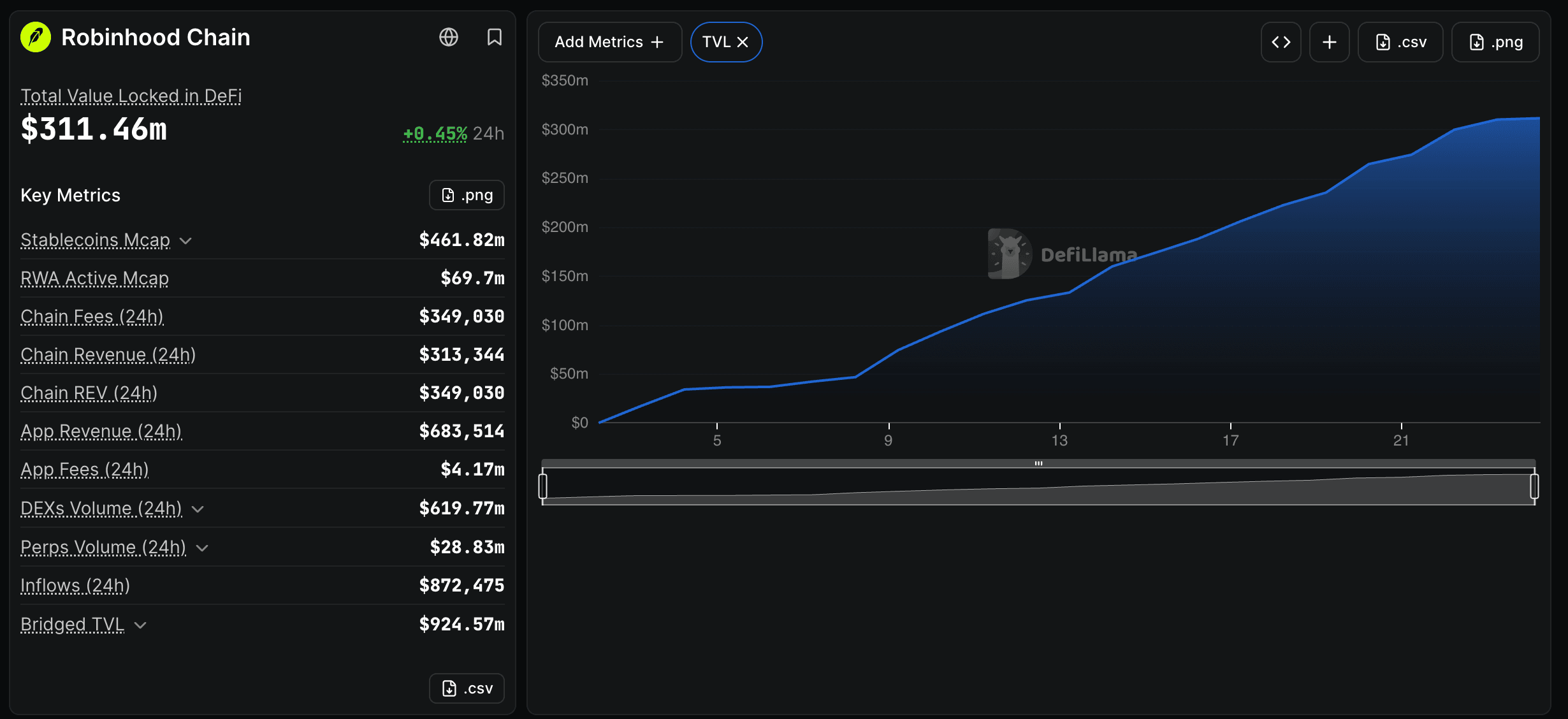
A new EVM rollup carrying tokenized stocks, stablecoins, and open lending markets is not just another L2 to review. It is a new category of attack surface, one that has not yet been tested under real adversarial pressure.
This is where we think the actual risk sits, for auditors and for anyone building on top.
A Different Kind Of Attack Surface
Most L2 audits start from one assumption: the smart contract is the whole product. If the code is correct, the product is safe.
That assumption breaks on an RWA chain. A Stock Token can have flawless code and still be wrong, if the price feed lags, if the issuer's off-chain reserve does not match the onchain supply, or if the legal agreement behind the token does not say what the marketing around it says it does. The token is a claim on something outside the chain, not the asset itself.
That is why a review here has to go past the contract. Our RWA Handbook groups this wider surface into five categories: asset-token mismatch, mint and burn exploits, privilege and admin risk, oracle failures, and custody and legal risk. Robinhood Chain touches all five within its first month live, which is what the rest of this piece walks through.
The L2 Risks Every Rollup Shares
Every Arbitrum Orbit chain, Robinhood Chain included, inherits the same base-layer risks. None of these are unique to Robinhood. All of them still apply.
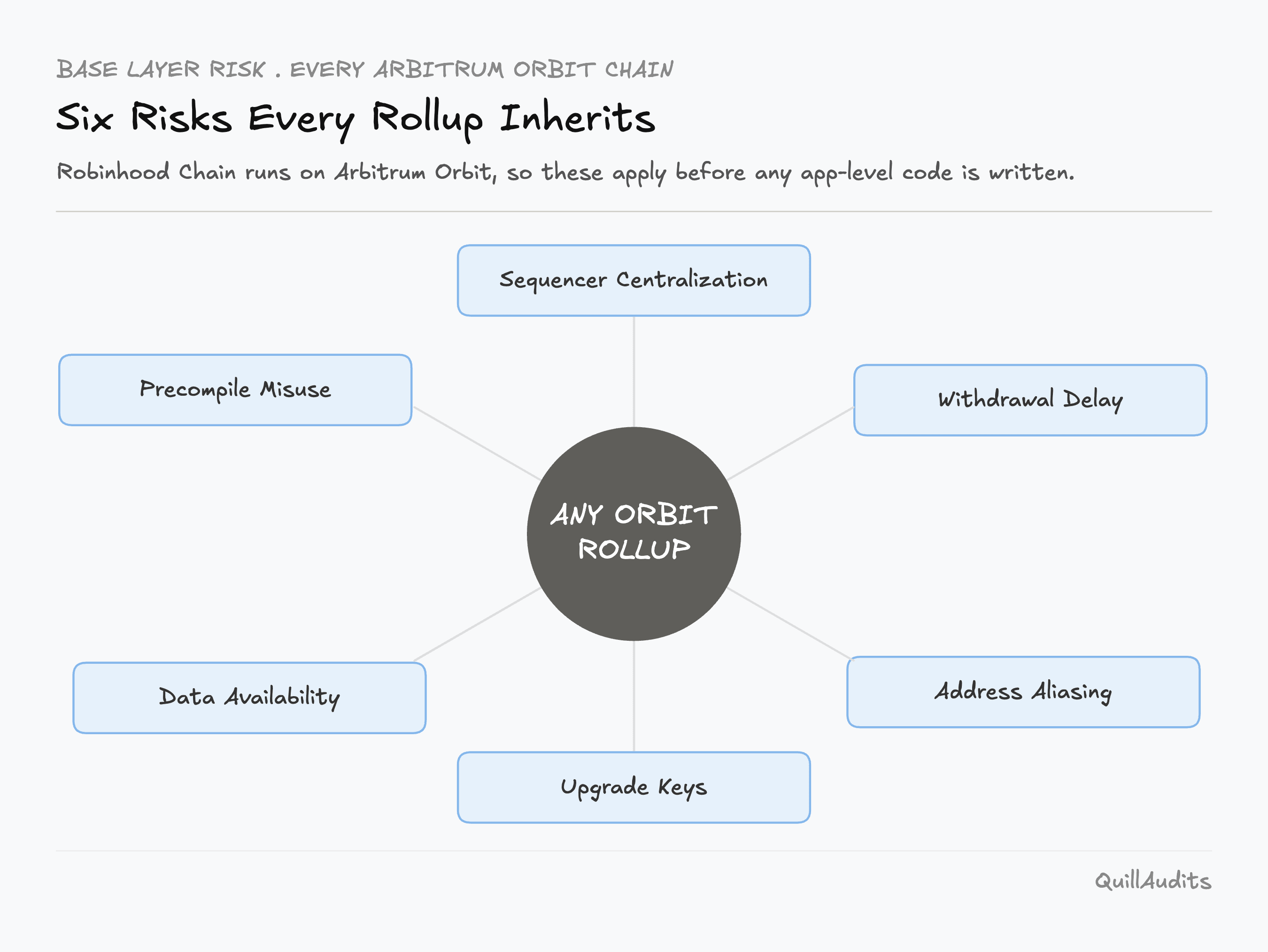
Sequencer centralization. A single sequencer orders every transaction. If it censors, stalls, or reorders before posting to Ethereum, users have no recourse until the next batch settles.
Withdrawal delay. Funds leaving L2 sit behind a seven-day fraud-proof challenge window. Any protocol quietly assuming same-day L1 liquidity is building on a false assumption.
Address aliasing. Contracts called from L1 see an aliased sender address, not the original caller. Access control that ignores this can be bypassed outright.
Precompile misuse. block.number, block.difficulty, and block.coinbase do not mean what they mean on Ethereum mainnet. Code ported over without adjustment breaks silently, not loudly.
Data availability. Robinhood Chain posts transaction data to Ethereum through blobs. If that posting is delayed or censored, the chain's security guarantee weakens until the data actually lands on L1.
Upgrade keys. Most Orbit chains launch with an upgradeable rollup contract controlled by a multisig or admin key. A compromised or careless upgrade key can change chain behavior entirely, independent of any application bug.
Teams migrating RWA products from mainnet miss this category more often than any other.
Where Robinhood Chain Adds Its Own Risk
Few things sit on top of the base Orbit risks, specific to this chain.
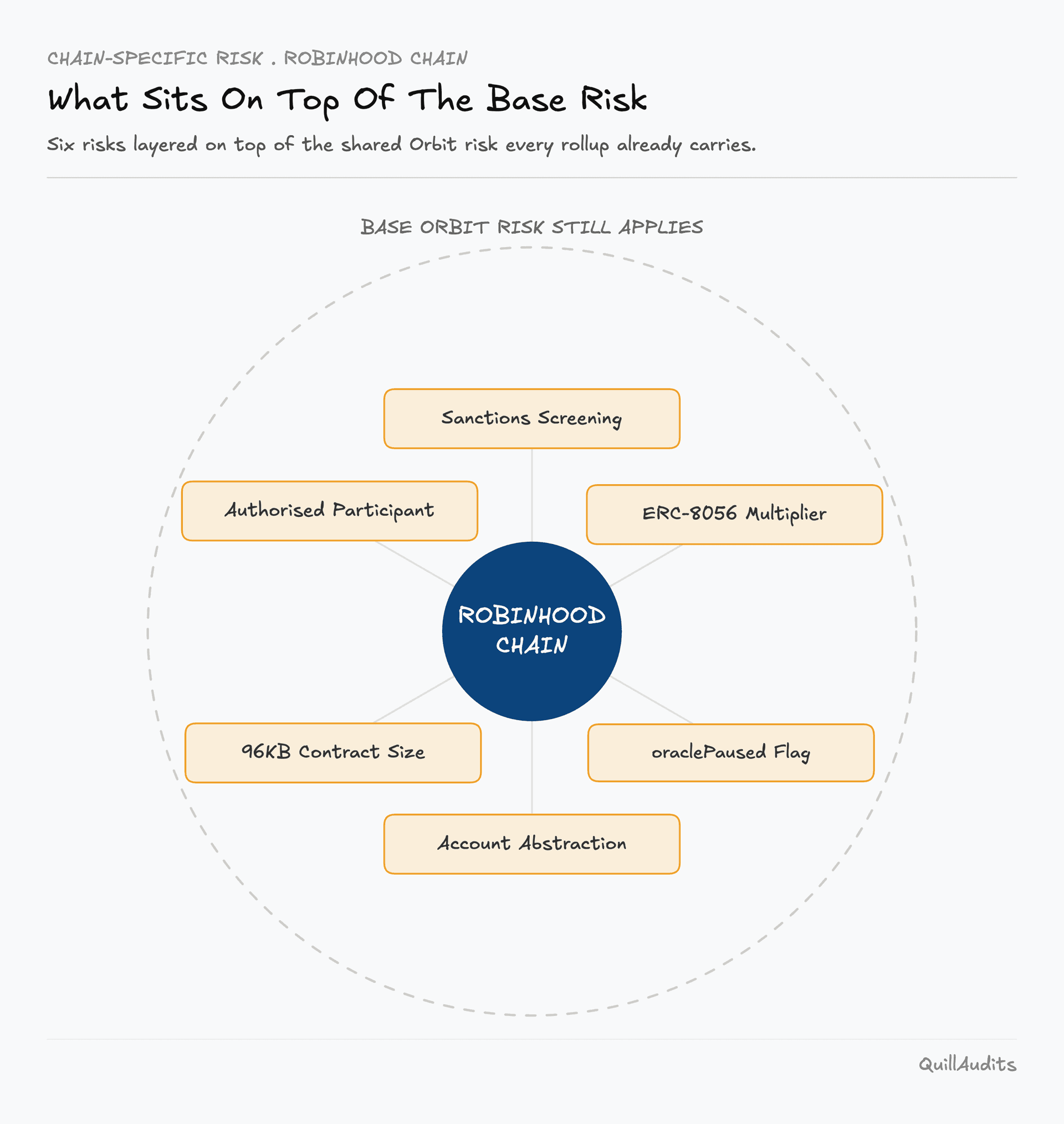
The sequencer filters transactions through sanctions screening before inclusion. A deliberate compliance choice, and also a single point of censorship power that belongs in any audit scope, not left as an assumption.
Stock Tokens use ERC-8056, scaling value through a uiMultiplier() function instead of rebasing balances. Chainlink feeds already price in that multiplier. Any protocol that reapplies it separately will double count the adjustment.
Around dividends and stock splits, an oraclePaused() flag signals an unreliable price. That flag is advisory only, never enforced onchain. Trusting it without an independent staleness check means trusting a suggestion, not a guarantee.
Contract size limits sit at 96KB, four times Ethereum's ceiling. More complex logic fits inside a single contract than most audits are used to reviewing.
Account abstraction through ERC-4337 and EIP-7702 lets wallets delegate to smart contract logic for gas sponsorship and session keys. A session key scoped too broadly, or a paymaster sponsoring more than it should, turns convenience into privilege escalation.
Why RWA Changes The Threat Model
97 tokenized stocks and ETFs are already live. 274,241 holders hold them. $363.91M moved through them in the last 30 days.
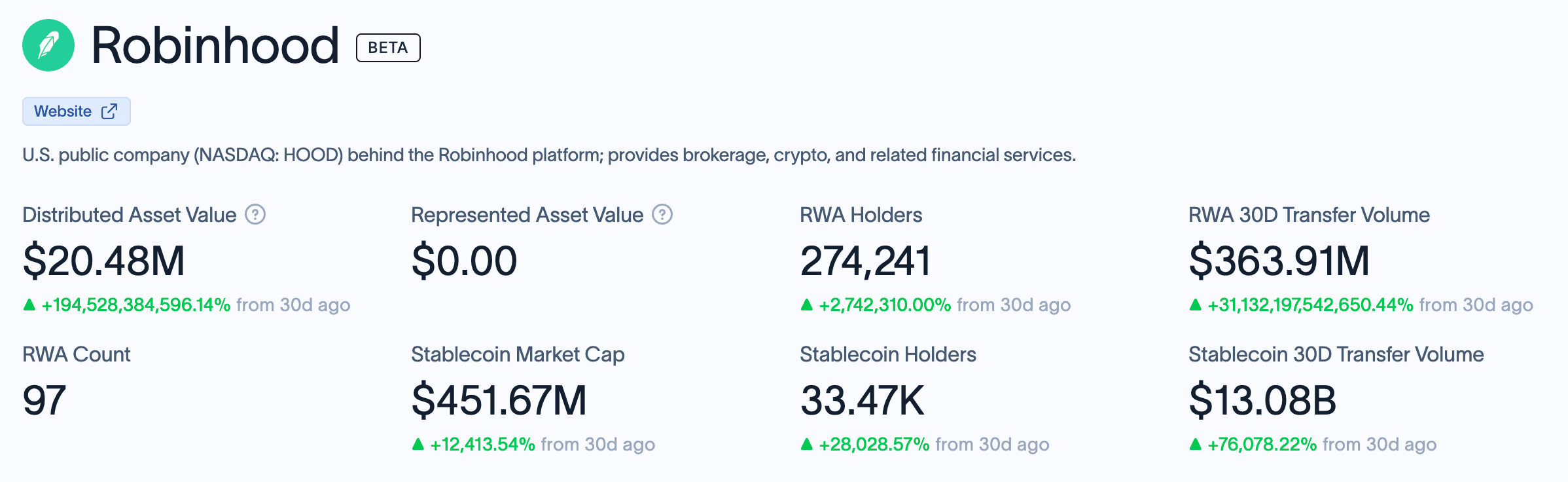
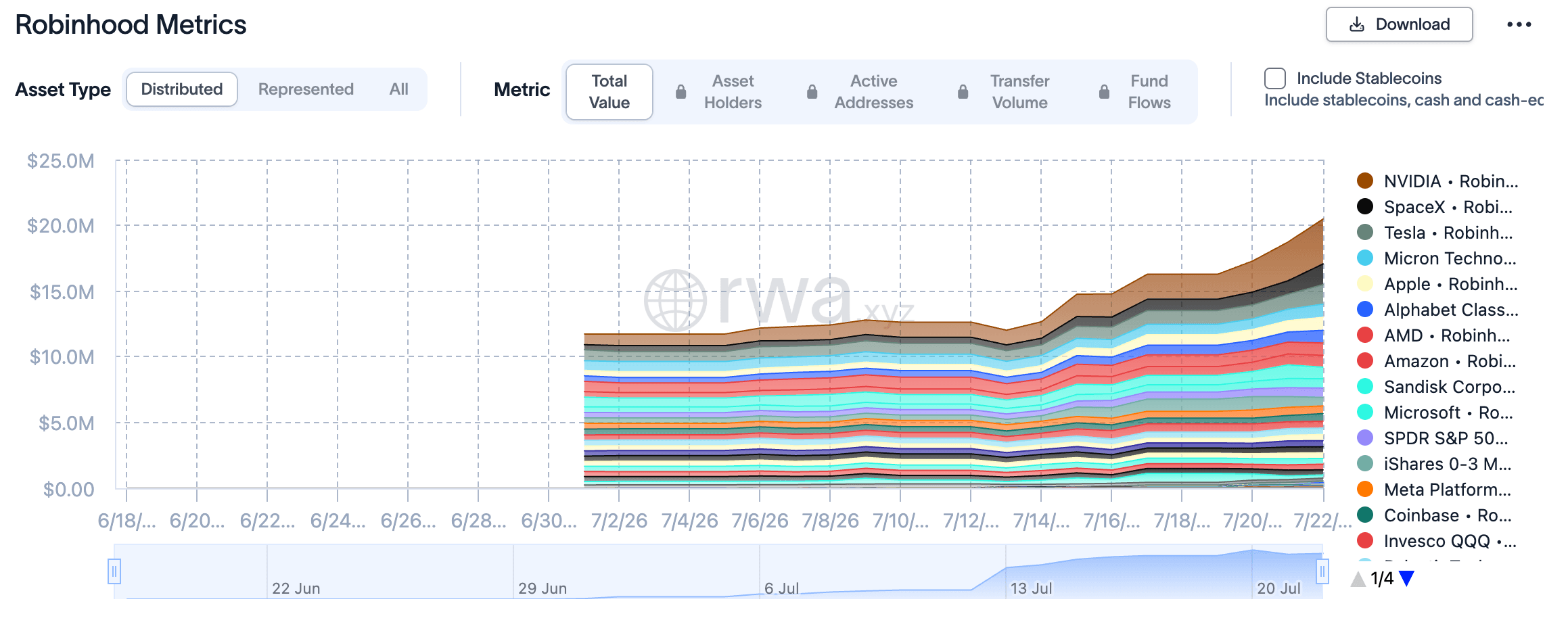
None of that value is secured by code alone. Every Stock Token is a debt security issued by Robinhood Assets Jersey Limited, not equity. A protocol that markets it as direct stock ownership creates a legal mismatch no contract audit will ever catch.
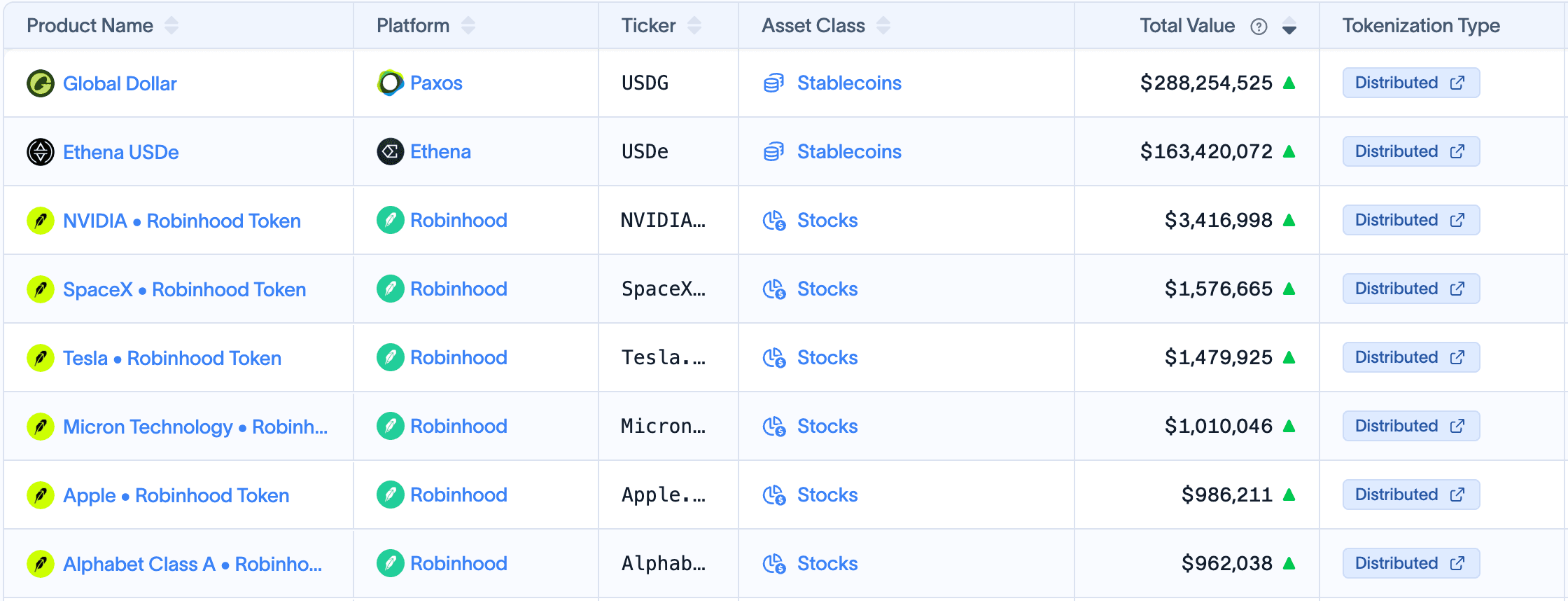
Stablecoin concentration adds a second dependency. Two issuers, Paxos and Ethena, carry the large majority of stablecoin value moving through the chain. Their health is now part of Robinhood Chain's risk surface, whether or not either name ever appears in Robinhood's own code.
Robinhood Is Also Open To AI Agents Now
Robinhood's agentic trading went live on July 20 for equities and options, running through Robinhood's traditional brokerage stack rather than Robinhood Chain itself. Connect an agent, and it can research, trade, and manage a portfolio through one MCP server, as Robinhood's own announcement thread put it.
Crypto support is described as coming next. That is the piece that will actually touch the chain, once an agent can initiate a trade that settles through Stock Tokens or other onchain assets instead of the traditional backend.
Robinhood CEO Vlad Tenev has been direct about the ambition. He has said every capability a human can do will be available to an AI agent, framing agentic trading as the next stage of the company's founding mission to democratize finance.
The risk itself lives at the application and integration layer today, not inside the chain. It belongs to whoever controls the agent's permissions: Robinhood as the party hosting the MCP server, the AI platform actually running the agent, and the end user who sets the approval mode. An agent acts through access a user already granted, so a compromised or manipulated agent can look identical to normal activity until the money is already gone.
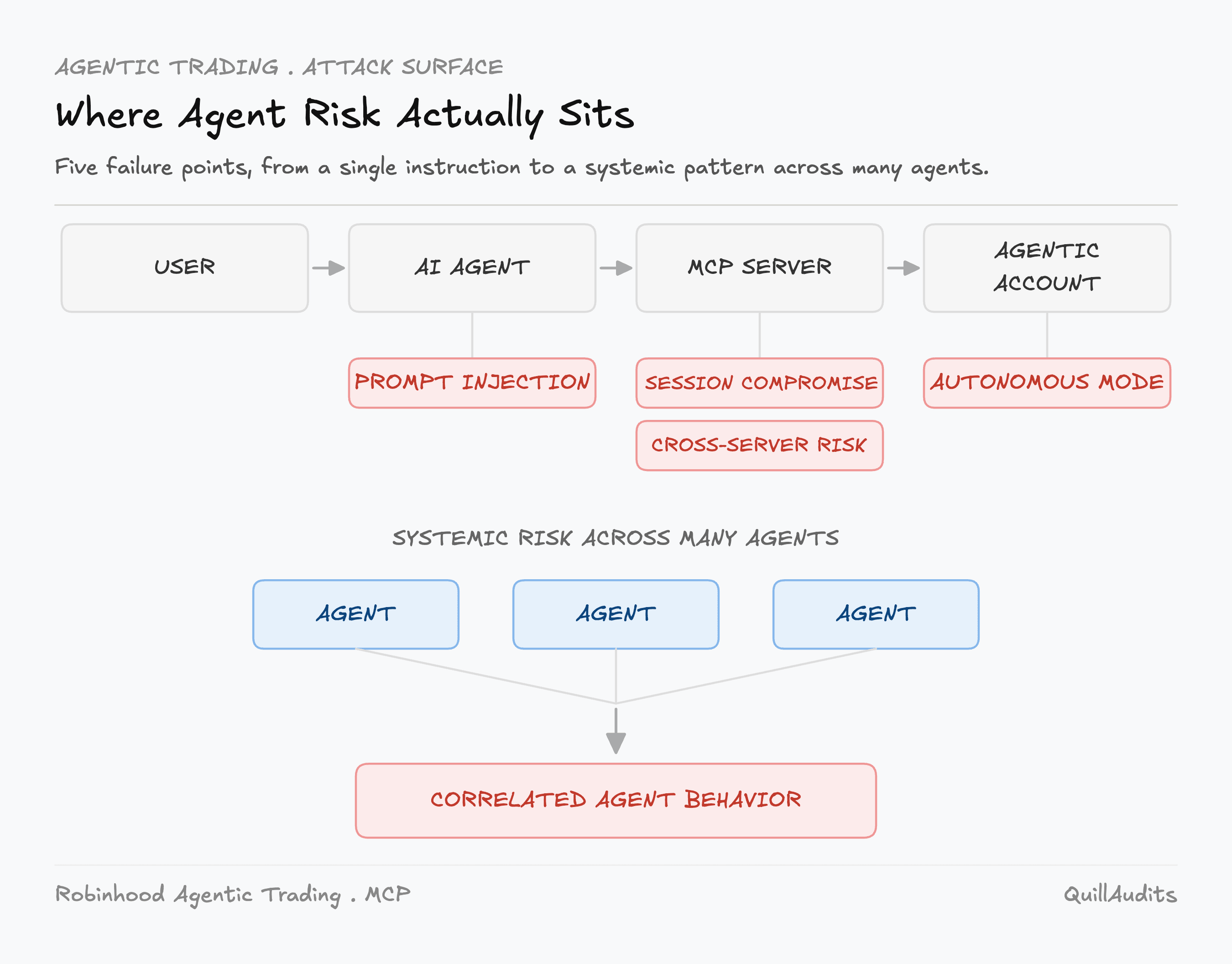
Prompt injection. An agent instructed to read news, social sentiment, or analyst notes before trading is also an agent reading untrusted content. Malicious text hidden in a webpage or report can steer a trade the user never asked for.
Autonomous mode. Robinhood lets users skip trade-by-trade approval entirely. Convenience pushes adoption toward that setting, which removes the one control most likely to catch a manipulated action before it executes.
Session and credential compromise. The MCP connection authenticates through OAuth, and Robinhood is explicit that it does not supervise or audit the agent on the other end. A leaked token or hijacked session hands an attacker a live, funded trading account.
Cross-server confusion. Agents can hold multiple MCP connections open in the same session. A malicious or compromised server sitting alongside Robinhood's can attempt to steer the agent's behavior toward the trading tools next to it.
Correlated agent behavior. Thousands of retail agents built on similar prompts and similar underlying models can converge on similar trades at the same time, a new, decentralized version of the correlated-selling risk behind past algorithmic flash crashes.
None of this makes the feature unsafe by design. It does mean this risk surface deserves the same scrutiny as the chain itself, especially once crypto agentic trading arrives and the two start sharing the same trust boundary.
What A Founder Should Prioritize First
Most of the risks above are things an auditor checks after code exists. This one is a question only a founder can answer before writing any of it: how much of your product's safety depends on someone else's decisions.
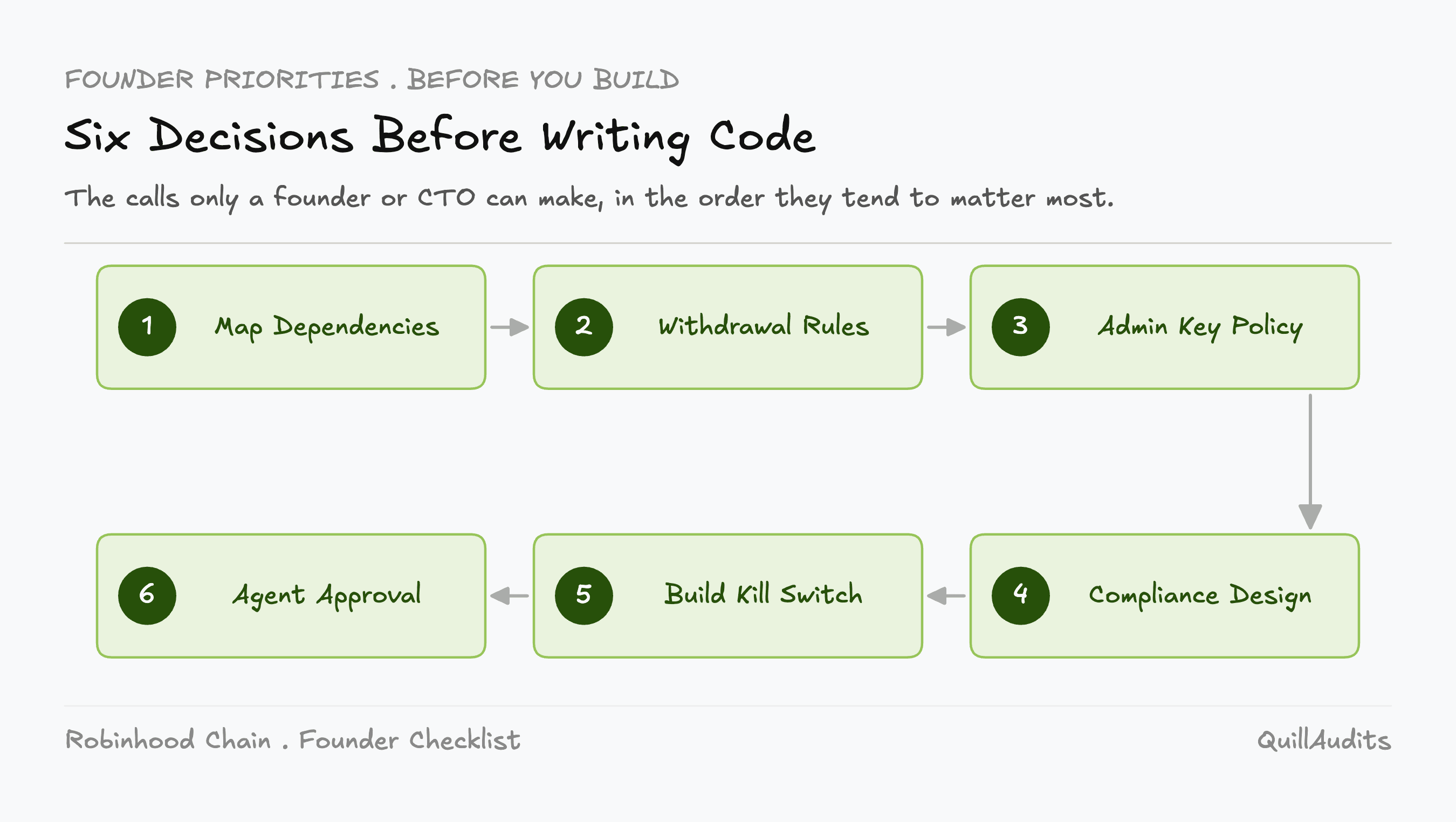
Map every third-party dependency by name. The sequencer operator, Chainlink, the Authorised Participant, Paxos, Ethena, and any AI agent platform you integrate are all part of your trust model now, whether you documented them or not.
Decide your withdrawal assumptions at the architecture level, not after a liquidity crunch. If your product promises fast redemptions to your own users, that promise has to survive a seven-day L1 settlement window sitting somewhere underneath it.
Fix your admin key policy before mainnet. Multisig thresholds, timelocks, and public documentation of upgrade powers are easy to defer and expensive to add later, especially with a 96KB contract size limit that makes it easier to bury upgrade logic inside otherwise ordinary code.
Treat compliance as a design constraint, not a legal patch. A sequencer that already screens for sanctions is telling you what kind of chain this is. Build KYC, geofencing, and disclosure decisions into the architecture instead of retrofitting them after a regulator asks.
Build the kill switch before you need it. A handful of counterparties, one sequencer, and a narrow mint and redeem pathway mean your protocol's uptime depends on people outside your team. Plan for any one of them failing without warning, not only for your own code failing.
If agents will ever touch user funds in your product, decide the approval model on day one. Default to human approval, and treat autonomous mode as a feature you earn the right to ship, not a default you enable for growth.
A Short Checklist For Builders And Auditors
For founders: check oracle staleness independently of the pause flag. Keep multiplier and price snapshots atomic. Document the Authorised Participant relationship as a named dependency, not an assumption. Test access control against aliased addresses on every function reachable from L1.
For anyone integrating agent access near a funded account: treat every external source the agent reads as untrusted input, require explicit trade approval by default, and log every session with enough detail to reconstruct who, or what, actually initiated a given action.
For auditors: scope the sequencer's compliance filter as a trust assumption, not an implementation detail. Review mint and burn pathways as counterparty risk, not just a code path. Treat the legal wrapper around each token as part of the audit, even when it sits outside the repository.
Conclusion
Three weeks in, Robinhood Chain already carries real securities, real stablecoin liquidity, and real leverage. Agentic trading is live alongside it, and crypto support is next, which is when the two start sharing a trust boundary. The attack surface only grows from here. Reviewing it now, while the numbers are still small, is cheaper than reviewing it after they are not.

Contents