Top 10 RWA Attack Vectors Every Developer & Auditor Must Watch
Top 10 RWA attack vectors every developer and auditor must watch to protect real-world asset protocols from exploits and security risks.

Real-World Assets (RWAs) represent a fascinating intersection of blockchain technology and traditional finance, where physical or legal assets like real estate, commodities, or securities are tokenized using standards such as ERC-7518 for tokenized assets, ERC-3525 for semi-fungible tokens, or custom vault systems with multi-signature guardians. However, this hybridization introduces complex security challenges, including off-chain dependencies, regulatory compliance risks, and novel exploit paths that pure on-chain protocols rarely face. Audits of prominent RWA projects, such as Continuum DAO's governance and tokenization framework, Global Gold's NFT-based vaults with guardian protections, and Zoniqx's TALM (Tokenized Asset Lifecycle Management) solutions, have uncovered patterns of vulnerabilities in areas like guardianship mechanisms, asset recovery processes, token locking/freezing logics, and allowance handling.
These issues often stem from incomplete access controls, logic errors in state transitions, or insufficient validation in token interactions, which can lead to asset theft, permanent locks, or denial-of-service attacks. In this expanded post, we generalize these findings into ten key attack vectors, providing deeper technical breakdowns, including detailed explanations of exploit mechanics, code examples for mitigations, flow diagrams illustrating attack flows, and best practices for developers and security auditors to build more resilient RWA systems.
Understanding attack vectors is only half the equation. Knowing how your own protocol stacks up against them is the other half. Use the RWA Security Score to evaluate your protocol across the same risk categories covered in this article
If you're still deciding which token standard and chain to build on, Tokenization 101 matches asset class to standard using live market data, useful context before the attack vectors below become relevant to your specific implementation.
A basic understanding of RWA design and the standards used in their implementation helps provide context for the security risks discussed below
For a broader view of RWA security risks across the full stack (physical, legal, operational, oracle, and smart contract layers) along with best practices, check out: RWA Security Risks and Best Practices: Securing Tokenized Assets End-to-End
1. Double-Charge in Token Splitting Operations
In RWA tokenization systems using semi-fungible standards like ERC-3525, splitting tokens (e.g., dividing a fractional asset) can lead to double-charging fees or value losses if the logic pulls fresh balances instead of repartitioning existing ones. This vector allows attackers to exploit splits by causing over-deductions, draining user funds, or inflating protocol fees. In RWAs, where splits represent real asset divisions, this can desync on-chain representations from off-chain holdings, leading to economic exploits or disputes.
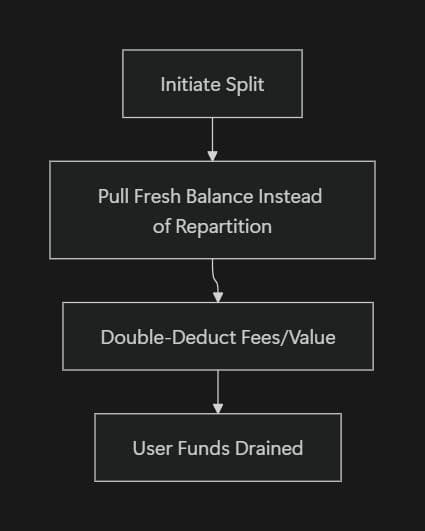
Vulnerable Code Example:
1function split(uint256 tokenId, uint256 newValue) external {
2    uint256 freshBalance = getBalance(tokenId); // Pulls new instead of using existing
3    _burn(tokenId, freshBalance - newValue); // Double-charge effect
4    _mint(newTokenId, newValue);
5}
6
Mitigated Code Example:
1function split(uint256 tokenId, uint256 newValue) external {
2    uint256 currentBalance = _balances[tokenId];
3    require(newValue < currentBalance, "Invalid split");
4    _balances[tokenId] -= newValue; // Repartition existing
5    _mint(newTokenId, newValue);
6}
7
Use repartitioning of existing balances to avoid fresh pulls. Add invariants for pre/post-split totals. Auditors should fuzz split ratios and simulate concurrent operations to detect drifts.
2. Missing Access Controls on Critical Parameters
RWA protocols frequently use configurable parameters like multi-sig thresholds for guardian approvals or initialization functions for setup. Without proper access controls, any user can modify these, such as setting a threshold to 1 for unilateral control or reinitializing contracts to take over ownership. This vector enables attackers to weaken security mechanisms, facilitating theft in vault systems where guardians protect off-chain assets. Audits show this often occurs in rushed implementations where setters or initializers are exposed for flexibility but lack restrictions, compromising the entire custody model. For example, privileged tokens treated as global owners can bypass standard checks, allowing unauthorized transfers, while unrestricted initializers permit post-deployment resets, resetting owners and draining assets.
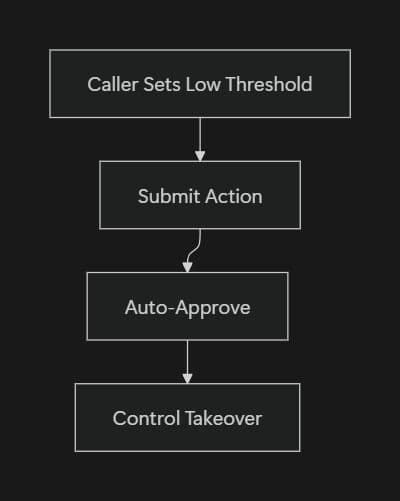
Vulnerable Code Example (Threshold Setter):
1function setThreshold(uint newValue) external {
2    threshold = newValue; // Unrestricted, allowing arbitrary changes
3}
4
Vulnerable Code Example (Unrestricted Init):
1function initialize() external {
2    owner = msg.sender; // No protection
3}
4
Vulnerable Code Example (Privileged Bypass):
1function transferToken(uint256 tokenId, address to) external {
2    if (isPrivileged[msg.sender]) return _transfer(tokenId, to); // Global bypass ignores standard checks
3    require(isOwner(msg.sender, tokenId), "Not owner");
4}
5
Mitigated Code Example (Threshold Setter):
1function setThreshold(uint newValue) external onlyAdmin {
2    require(newValue >= minThreshold && newValue <= guardianCount, "Invalid threshold"); // Bounds and access control
3    threshold = newValue;
4}
5
Mitigated Code Example (Initializer):
1function initialize() external initializer {
2    _initOwner(msg.sender); // Uses Initializable
3}
4
Mitigated Code Example (Privileged Check):
1function transferToken(uint256 tokenId, address to) external {
2    require(isOwnerOrApproved(msg.sender, tokenId), "Unauthorized"); // Enforce granular checks without global bypasses
3    _transfer(tokenId, to);
4}
Use modifiers and input validation for all setters. Auditors should flag unrestricted external functions modifying sensitive storage.
3. Incomplete State Resets in Recovery Mechanisms
Recovery systems in RWA vaults allow guardians to transfer ownership if keys are lost, but incomplete cancellations (e.g., resetting approvals but not the pending request state) permit executions after supposed revocation. This bug, often due to decoupled contracts, lets malicious guardians steal assets by exploiting stale states. In RWAs, this could transfer tokenized gold or real estate without consent, amplifying legal risks.
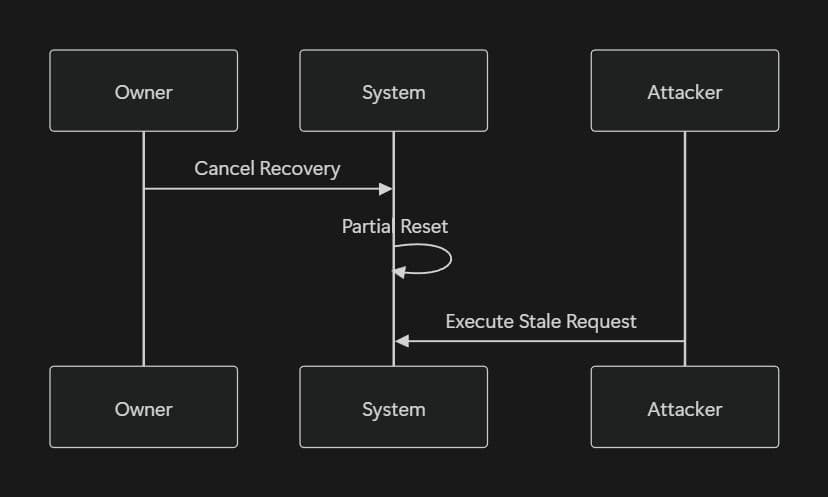
Vulnerable Code Example:
1function cancelRecovery(uint id) external {
2    approvals[id] = 0; // Resets approvals but leaves request active
3}
4
Mitigated Code Example:
1function cancelRecovery(uint id) external onlyOwner {
2    delete recoveries[id]; // Full deletion
3    approvals[id] = 0;
4    emit RecoveryCancelled(id); // Traceability
5}
Ensure atomic operations across related states. Test full recovery cycles with timing variations, and auditors should trace storage slots for inconsistencies.
4. Checkpoint Bypasses Leading to Accounting Drifts
In RWA governance, checkpoints track historical balances for voting or yields. Mint/burn functions bypassing these updates cause drifts, allowing manipulated votes or dividends. This subtle error, from alternative paths skipping internal calls, can skew DAO decisions on asset management, leading to unfair distributions.
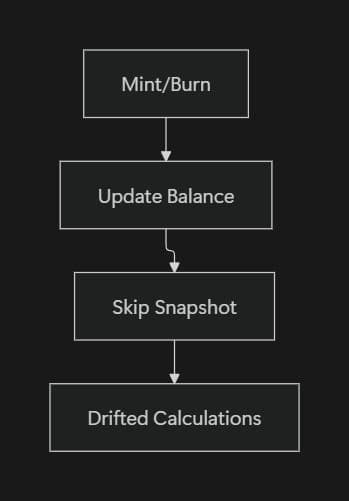
Vulnerable Code Example:
1function mint(uint256 value) internal {
2    balance += value; // Bypasses checkpoint push
3}
4
Mitigated Code Example:
1function mint(uint256 value) internal {
2    balance += value;
3    _pushCheckpoint(block.timestamp, balance); // Ensures consistency
4}
Route all mutations through unified internals to guarantee checkpoint inclusion. Leverage invariant testing frameworks for detecting drifts by simulating long-term scenarios with multiple mint/burn cycles. Auditors should implement property-based tests to verify balance-snapshot alignment, and consider formal verification tools for proving consistency invariants across epochs.
5. Private Key Compromise in RWA Protocols
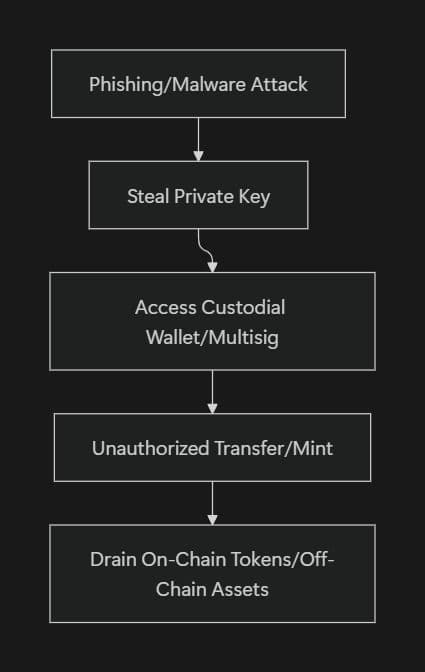
Private key compromises represent one of the most devastating attack vectors in Real-World Asset (RWA) protocols, where keys often control custodial wallets or multisig setups linked to off-chain assets like real estate or commodities. In 2025, this became the predominant threat, accounting for billions in losses across the crypto ecosystem, with RWA projects particularly vulnerable due to their hybrid nature, combining on-chain tokenization with off-chain custody. Attackers exploit phishing, malware, or insider threats to steal keys, enabling unauthorized transfers, minting, or asset drains. Unlike smart contract bugs, these are human-centric failures, but in RWAs, they lead to irreversible real-world losses, as tokenized assets can't be forked back.
Exploit Flow:
Vulnerable Code Example:
1// Simple multisig without advanced key protection
2function executeTx(bytes calldata data) external {
3    require(isSigner(msg.sender), "Not signer"); // Relies solely on key control
4    (bool success,) = target.call(data);
5    require(success, "Tx failed");
6}
7
Mitigated Code Example:
1// Enhanced with MPC and threshold
2import { MPCWallet } from "mpc-library.sol";
3
4contract SecureRWACustody is MPCWallet {
5    function executeTx(bytes calldata data, bytes calldata mpcSig) external {
6        require(verifyMPCSig(mpcSig, keccak256(data), threshold), "Invalid sig"); // MPC splits key
7        (bool success,) = target.call(data);
8        require(success, "Tx failed");
9    }
10}
11
Implement Multi-Party Computation (MPC) or hardware security modules (HSMs) to split keys across entities, reducing single-point failures. Use social recovery wallets and regular key rotations. Developers should enforce timelocks on critical actions and integrate monitoring for anomalous signings. Auditors must assess off-chain key management practices, including phishing simulations and review of custody providers, while recommending bug bounties focused on social engineering vectors.
6. Unauthorized Modifications to Locking States
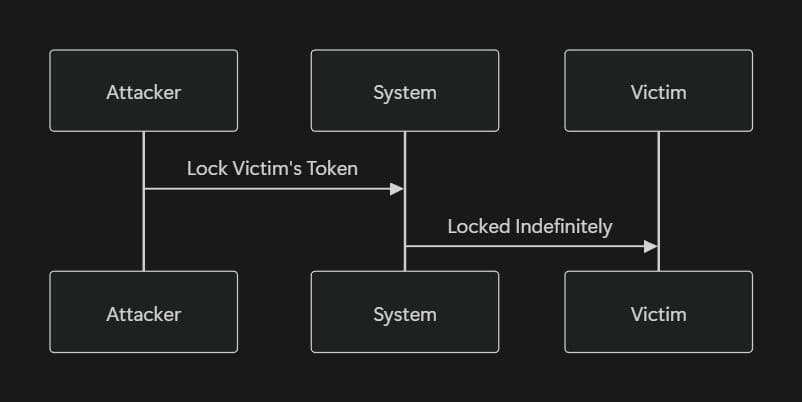
Locking in RWAs enforces compliance via vesting or holds, but unrestricted functions let attackers lock/unlock others' tokens, causing DoS or bypassing rules through arbitrary state changes. This stems from missing caller checks, disrupting liquidity in shared models. It may also affect multi-user interactions severely.
Vulnerable Code Example:
1function lock(uint id, uint time) external {
2    lockTime[id] = time; // No authorization
3}
4
Mitigated Code Example:
1function lock(uint id, uint time) external {
2    require(ownerOf(id) == msg.sender || isApproved(msg.sender, id), "Unauthorized");
3    lockTime[id] = time;
4}
Enforce ownership or approvals with require statements, and add events for traceability. Test with multi-account simulations, covering edge cases like zero times or max values. Auditors should scan for unauthorized storage writes and simulate DoS scenarios to assess the impact on protocol liquidity.
7. Incomplete Enforcement of Freezing Mechanisms
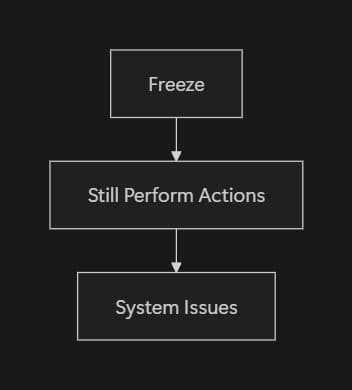
Freezing in RWAs halts non-compliant accounts, but incomplete integration allows frozen tokens to claim rewards or vote, or admin freezes cause DoS. This undermines sanctions due to omitted hooks in modular code. Protocols with layered features are particularly susceptible to this.
Vulnerable Code Example:
1function freeze(address account) external {
2    frozen[account] = true; // No integration into actions
3}
4
Mitigated Code Example:
1function _beforeAction(address account) internal view {
2    require(!frozen[account], "Frozen"); // Hook everywhere
3}
Integrate freeze checks into all hooks like _beforeTokenTransfer and auxiliary functions. Use coverage tests to ensure 100% branch coverage for freeze paths, including admin scenarios. Auditors should perform symbolic execution to identify unhooked entrypoints and evaluate regulatory compliance risks.
8. Bypass of Lock Checks in Batch Operations
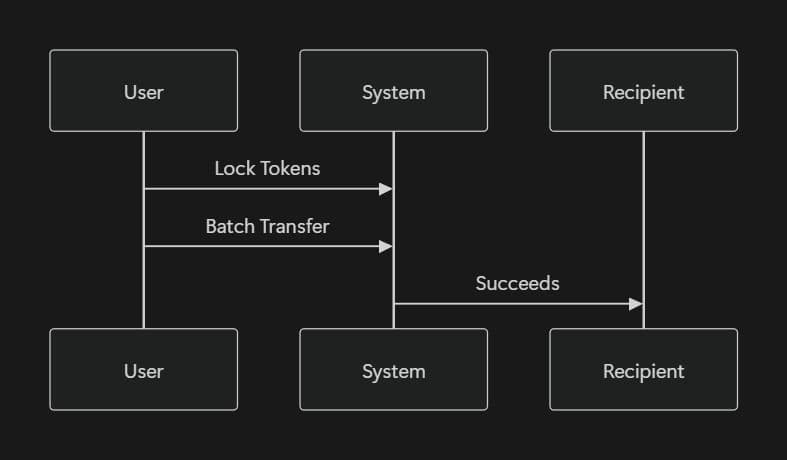
Batch functions optimize multi-token transfers in RWAs but skip per-item lock checks, allowing early movement of vested assets and violating regulations. This assumes homogeneity, ignoring individual states. Performance optimizations often overlook these per-token validations.
Vulnerable Code Example:
1function batchTransfer(uint[] calldata ids) external {
2    _transfer(ids); // No lock checks
3}
4
Mitigated Code Example:
1function batchTransfer(uint[] calldata ids) external {
2    for (uint i; i < ids.length; ++i) {
3        require(block.timestamp >= lockTime[ids[i]], "Locked");
4    }
5    _transfer(ids);
6}
Mirror single-item checks in batches with explicit loops, balancing gas costs. Auditors compare single vs. batch paths using gas profiling and test for regulatory violations in vesting simulations.
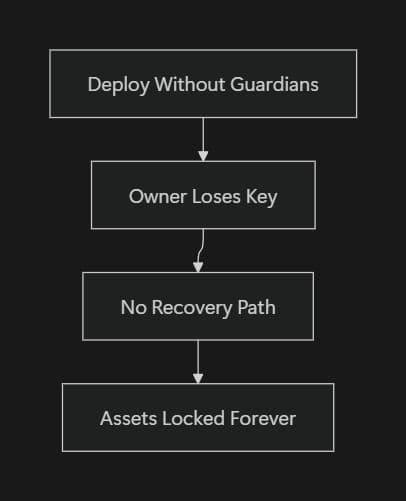
9. Permanent Asset Locks from Absent Guardians
In RWA vaults, guardians enable recovery, but deploying without them or removing all leads to permanent locks if owners lose access. This vector causes asset immobilization, as no fallback exists, tying up real-world value indefinitely. Common in rushed deploys, it highlights initialization risks.
Exploit Flow:
Vulnerable Code Example:
1function initialize() external {
2    // No guardian requirement
3}
Mitigated Code Example:
1function initialize(address[] calldata guardians) external {
2    require(guardians.length >= MIN_GUARDIANS, "Require guardians");
3    for (uint i; i < guardians.length; ++i) _addGuardian(guardians[i]);
4}
Mandate a minimum of guardians on init and prevent zero-guardian states in removals. Auditors test deployment scripts and removal flows for lock scenarios.
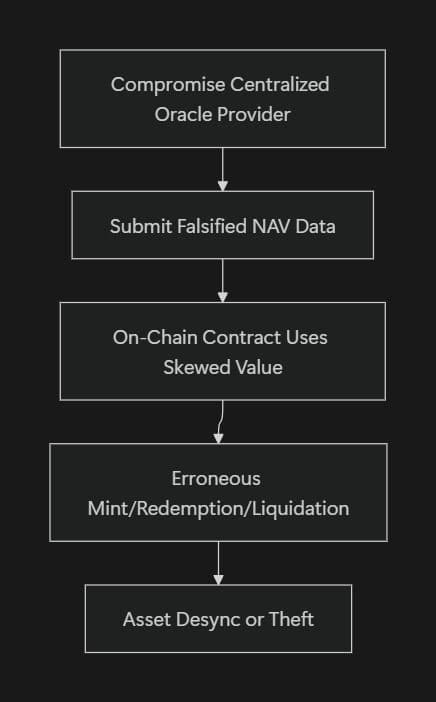
10. Centralized NAV Oracle Compromise
In Real-World Asset (RWA) protocols, oracles typically provide Net Asset Value (NAV) data from off-chain sources like custodians or asset auditors, rather than on-chain TWAP from DEXs, to reflect the true underlying asset worth (e.g., for tokenized real estate or funds). However, these oracles are often centralized, creating a single point of failure where attackers can compromise the data feed through off-chain hacks, insider threats, or forgery, leading to inaccurate valuations. This can trigger erroneous minting, redemptions, or liquidations, causing token depegging or asset theft. Unlike DeFi oracles, RWA NAV oracles rely on trusted entities, amplifying risks from human error or targeted attacks, as seen in cases where manipulated feeds drained protocols of real-world backed value.
Exploit Flow:
Vulnerable Code Example:
1function updateNAV() external onlyOracle {
2    navValue = msg.data; // Trusts centralized input without verification
3}
Mitigated Code Example:
1function updateNAV(uint256 newNAV, bytes calldata signature) external {
2    require(verifySignature(newNAV, signature, trustedSigners), "Invalid signature"); // Multi-sig verification
3    require(abs(newNAV - lastNAV) < maxDeviation, "Excessive change"); // Deviation check
4    navValue = newNAV;
5}
6
Use multi-signature oracles with off-chain verification from multiple custodians, and implement on-chain deviation thresholds or time-locks for updates. Integrate zero-knowledge proofs for data integrity. Auditors should review Oracle integrations with penetration testing on off-chain components, simulating insider attacks.
Conclusion
RWA protocols operate at a fragile boundary between on-chain logic and off-chain trust. The attack vectors discussed here show that most failures don’t come from complex cryptography, but from overlooked assumptions, privileged roles, centralized oracles, recovery flows, batch optimizations, and human-managed keys.
For developers, the lesson is clear, design RWAs with adversarial behavior in mind on both sides of the stack. Enforce least-privilege access, keep state transitions consistent, mirror checks across all execution paths, and treat off-chain inputs as untrusted by default. For auditors, effective RWA reviews must extend beyond Solidity into custody models, oracle governance, and recovery semantics. As RWAs grow, strong RWA security practices will be essential to building systems that users can trust long term.

Contents