RWA Handbook
RWA Ecosystem Landscape
A concise guide to the RWA ecosystem, covering leading platforms, architectural models, compliance structures and asset tokenization mechanisms.
This section provides an overview of the major RWA platforms and how they operate. It focuses on the essentials: what each protocol tokenizes, the architectural models they rely on (such as vaults, SPVs, tranching, and compliance layers), how their off-chain processes connect with on-chain smart contracts, and the key takeaways developers can draw from these designs. The goal is to give you a practical mental framework for understanding how leading RWA systems function as of late 2025, based on official documentation and public updates.
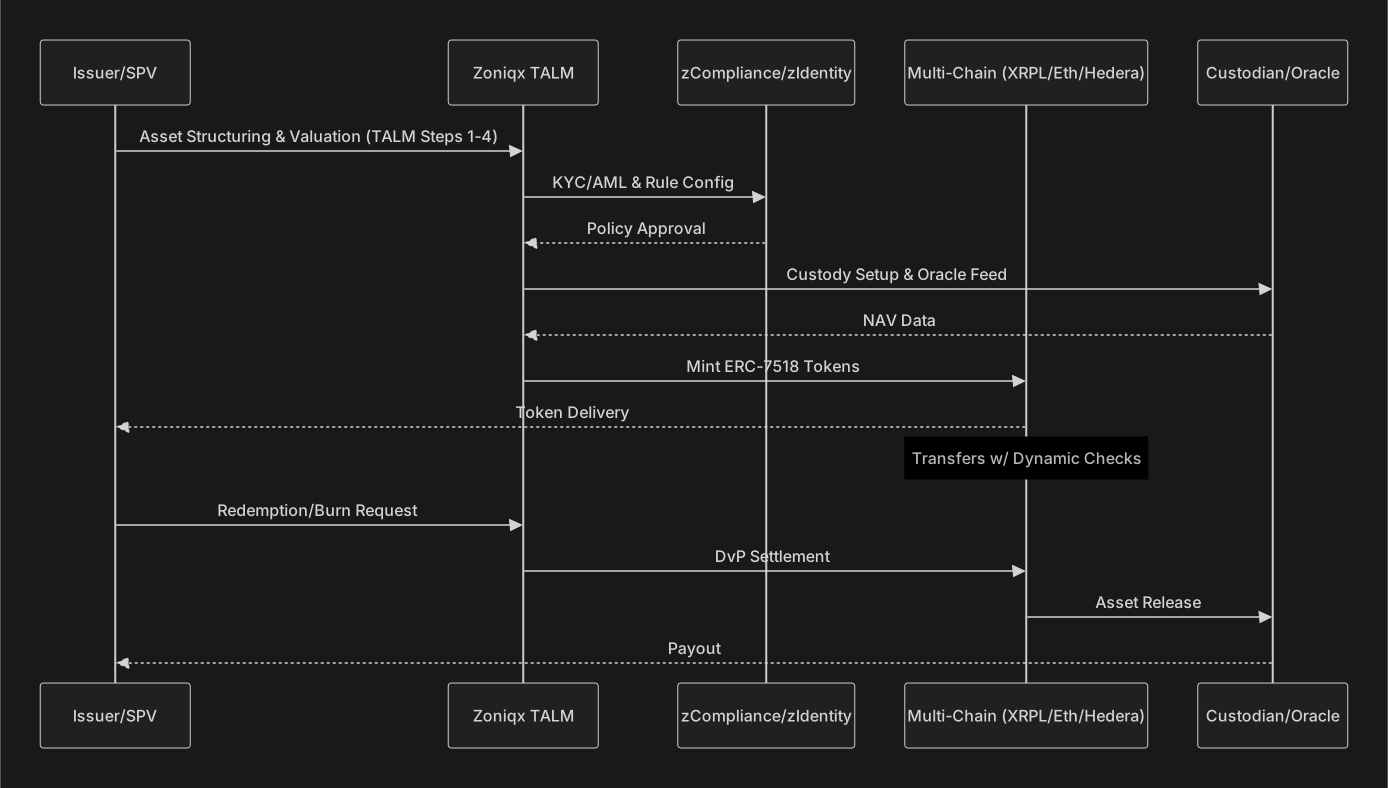
Each entry follows a consistent structure for easy reference. Wherever the architecture introduces important advantages or complexities, we include Mermaid diagrams to illustrate the core flows.
Each entry below reflects a specific standard and architecture choice, ERC-3643 for Tokeny, ERC-1400 for Securitize, ERC-4626 for OpenEden, and so on. If you're mapping your own asset to a standard, chain, and regulatory path rather than pattern-matching across a dozen case studies, Tokenization 101 walks through that decision directly, with live market data and audit-readiness scoring alongside it.
Ondo Finance
What they tokenize?
- U.S. Treasuries through products like OUSG and USDY
- Money market funds
- Institutional-grade fixed income such as short-term government securities
How Ondo works?
Ondo issues tokenized fund products on its purpose-built Ondo Chain, a proof of stake Layer 1 tailored for RWA operations, and makes them available cross-chain through secure bridging. The underlying assets are held by a U.S. based SPV, which acquires Treasuries through regulated custodians such as BNY Mellon. Investors receive ERC-20 vault tokens that represent pro rata claims, with daily NAV attestations verified by auditors and pushed on-chain through Chainlink oracles.
Yield is reflected through changes in share price rather than via rebasing. Transfers are permissioned, enforced by on-chain compliance checks that validate investor accreditation and jurisdiction. Off-chain, the SPV manages purchases and redemptions asynchronously with T+1 settlement. On-chain, minting and burning follow verified NAV updates to ensure accurate accounting.
Core architecture flows from issuance to yield distribution:

Developer takeaways
Ondo's L1 native architecture reduces its reliance on external oracles but introduces additional cross-chain considerations. The asynchronous NAV update pattern is a solid model for any on-chain yield-bearing vault, though permissioning hooks must be audited thoroughly to prevent unexpected transfer constraints. This design is less suitable for teams targeting non EVM ecosystems unless CCIP or compatible bridging support is already in place.
Centrifuge
What they tokenize?
- Real world credit such as invoices, SME loans, and trade finance
- Real estate backed debt
- Private credit pools
How Centrifuge works?
Centrifuge deploys credit pools on Ethereum, Base, and Arbitrum as composable on-chain liquidity structures. Off-chain, legal SPVs originate and finance credit assets through formal agreements. Borrowers submit assets that are verified and attested before inclusion. On-chain, the Tinlake framework uses upgradable proxy contracts to manage dual tranche pools: a senior tranche represented by DROP tokens with lower risk exposure, and a junior tranche represented by TIN tokens that absorb first loss.
NAV updates are pushed on-chain through oracle relays and directly influence redemption logic. Borrower repayments move from the off-chain environment to the chain through designated relayers. Transfers remain permissioned after investor KYC, and yield is distributed pro rata according to each tranche's priority rules.
Tranching and repayment architecture:

Developer takeaways
Centrifuge's separate token contracts for each tranche offer a clean approach to risk segregation, but they require precise liquidation safeguards to avoid junior tranche wipeout scenarios cascading unexpectedly. The model works well for credit based systems, though relayer dependence introduces a centralization risk. For production grade deployments, use multi signer oracle relays or diversified data sources to mitigate this exposure.
Zoniqx
What they tokenize?
- Real estate properties via fractional ownership, including U.S. and GCC portfolios exceeding $100M in 2025 tokenized volume
- ESG assets like carbon credits and sustainable energy offsets for DeFi yield integration
- Private equity and debt instruments, such as Aurum Equity Partners' $1B AI data center fund with tokenized tranches
How Zoniqx works?
Zoniqx deploys tokenized RWAs through its Tokenized Asset Lifecycle Management (TALM) platform, a compliant system supporting multi-chain issuance on XRPL for settlement speed, Ethereum/Polygon for liquidity, and Hedera for scalability. Assets are structured in regulated SPVs with custodians like FNIRA-approved entities, using ERC-7518 (DyCIST) standards for dynamic security tokens that blend ERC-20 fractionalization with ERC-721 uniqueness and embedded compliance rules. Investors mint tokens post-KYC via zIdentity, with oracle valuations (e.g., Chainlink feeds) ensuring NAV accuracy, transfers enforce accreditation and jurisdictional whitelists on-chain. Redemption follows a DvP model with T+0/T+1 settlement, automating payouts through zPay APIs while handling corporate actions like dividends as on-chain yields.
Developer takeaways
Zoniqx’s TALM stack helps simplify RWA operations and can cut costs by nearly half. ERC7518 works well for regulated markets because it bakes compliance logic directly into the token. For smooth integration across DeFi, developers should lean on the zConnect SDKs, which make multi-chain and EVM workflows much easier. However, this setup may feel heavy for projects that operate only on a single Layer-1 chain and don’t have experience handling cross-chain infrastructure.
Brickken
What they tokenize?
- Real estate for fractional ownership, including residential and hospitality assets, with tokenized property funds and REIT-style structures deployed across multiple regions.
- ESG and clean energy projects, such as natural hydrogen and renewable energy ventures, are offered as compliant digital securities for broader investor access.
- Financial instruments such as equity, bonds, loans, and debt, as well as niche assets like cultural IP, e.g., the Broadway theatre investment tokenized as “Kowalski Coin” via Helm Capital.
How Brickken works?
Brickken delivers end-to-end RWA tokenization via its Digital Asset Platform, a compliant no-code suite supporting issuance on Ethereum, Polygon, BNB Chain, and Base for low-cost scalability and interoperability. Assets are structured in SPVs with European regulatory-aligned custodians, minting ERC-1400 security tokens (fractional ERC-20 compliant) that embed transfer restrictions and dividend rights. KYC/KYB gates investors through integrated portals, with NAV updates via oracles for real-time transparency. Transfers enforce whitelists and accreditation on-chain, while automated back-office processes handle corporate actions like yields as rebasing. Redemption uses DvP for T+1 settlements, routing proceeds to fiat gateways. Core architecture prioritizes whitelabel APIs for broker integration, enabling lifecycle automation from tokenization to secondary trading on compliant marketplaces. Notably, Brickken has also authored the ERC-7943 standard, further expanding its role in shaping compliant RWA tokenization on Ethereum.
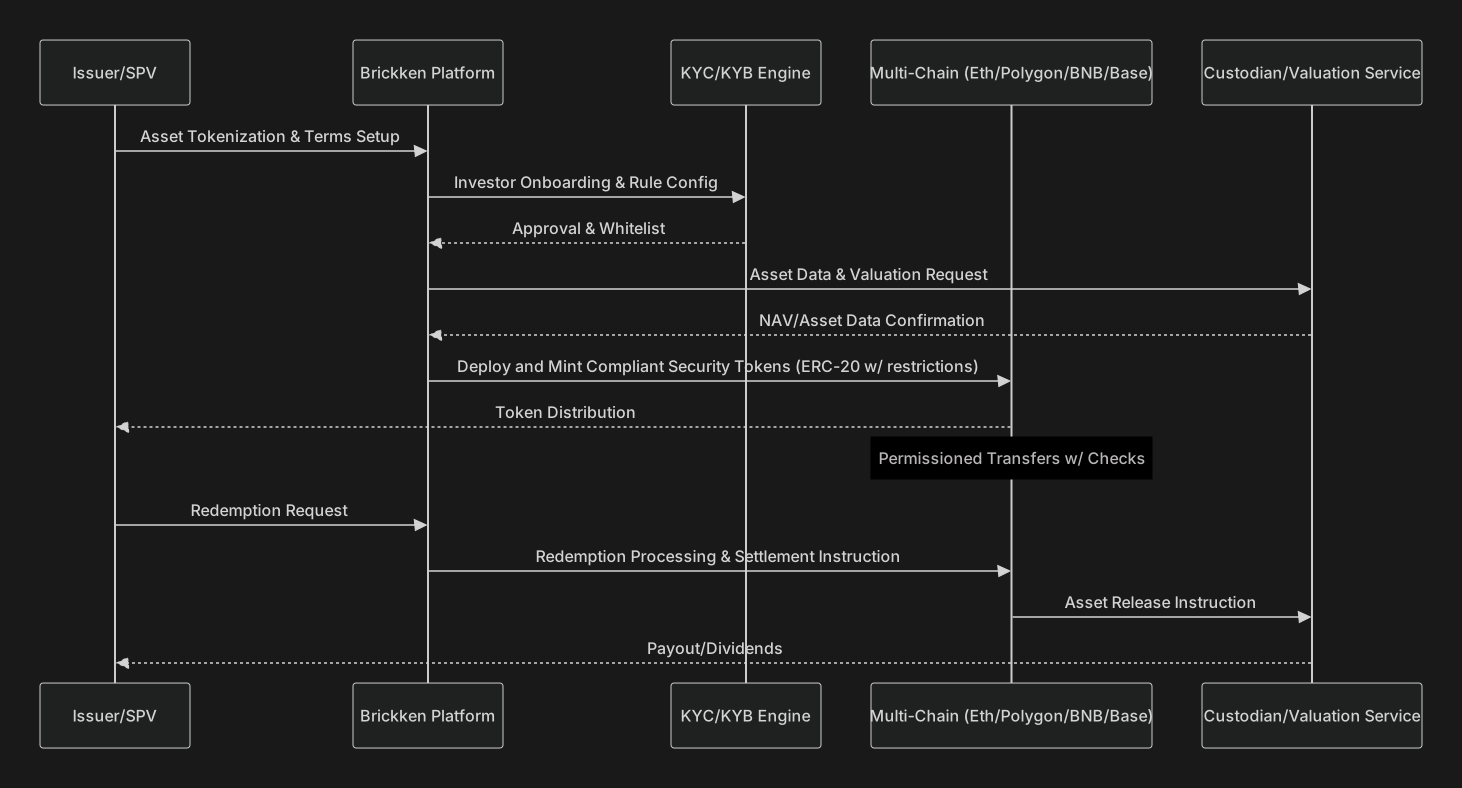
Developer takeaways
Brickken's no-code Digital Asset Suite accelerates RWA launches with MiCA-aligned compliance and API-driven integrations, significantly reducing setup time for compliant asset tokenization—though the exact reduction percentage may vary by project. Developers should audit token hooks (such as those for transfer restrictions and compliance) to ensure jurisdiction-specific rules are properly enforced and avoid unintended lockups. Multi-chain support via BNB/Eth bridges enhances liquidity for EVM-based projects, but reliance on oracles for NAV updates necessitates robust tamper-proof testing. The platform is ideal for whitelabel fintechs building TradFi-DeFi hybrids, but may require custom adapters for non-EVM blockchains, limiting its appeal for purists outside the EVM ecosystem.
Maple Finance
What they tokenize?
- Institutional corporate loans
- Undercollateralized credit for both crypto native and expanding RWA markets
How Maple works?
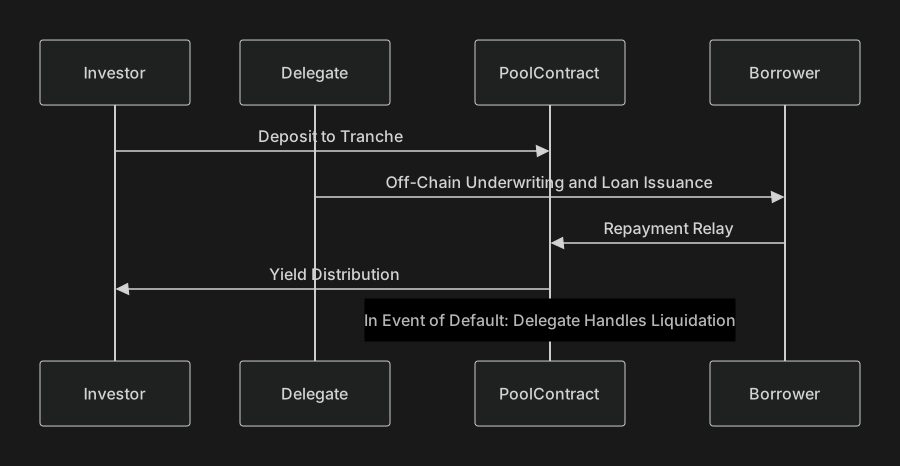
Maple operates credit pools on Ethereum and Solana, led by Pool Delegates who act as underwriters. These delegates originate and structure loans off-chain through legal agreements. On-chain, the protocol uses upgradable pool contracts to enforce repayment schedules, interest terms, and collateral requirements when collateral is involved.
Investors can allocate funds into senior or junior tranches, and repayments are automatically routed to them through contract hooks. Unlike traditional tranching models, Maple relies heavily on the delegate's risk assessment rather than purely on-chain mechanisms, with circuit breakers in place to handle borrower defaults.
Pool lifecycle flow:
Developer takeaways
Delegate driven origination improves underwriting efficiency but introduces trust and centralization risks. Implement protections such as timelocked contract upgrades and oracle governed default logic to reduce these vulnerabilities. Maple's design suits hybrid credit systems, and developers can extend it further by incorporating RWA collateral modules to enhance composability.
Goldfinch
What they tokenize?
- SME loans in emerging markets
- Undercollateralized, trust based credit
How Goldfinch works?
Goldfinch connects lenders with off-chain borrowers through a network of Auditors, who act as underwriters and assess creditworthiness before loans are approved. On-chain, the protocol organizes liquidity into a dual tier structure: junior backers, who stake GFI to provide first loss protection, and senior liquidity providers, who supply larger pools of capital with lower risk exposure.
Smart contracts track repayment schedules, with repayment data relayed on-chain through oracles. In the event of borrower distress, losses are absorbed by the junior pool first. Transfers remain open once KYC requirements are met. Yield is reflected through changes in token value rather than through rebasing.
Tiered funding model:

Developer takeaways
The use of staked capital from junior backers creates genuine skin in the game and helps reduce moral hazard in undercollateralized lending. This model is effective for RWA credit but benefits from additional governance features, such as backer veto rights or stronger sanction mechanisms. Since the system relies on off-chain Auditors, developers should incorporate robust on-chain verification layers to ensure transparency and integrity.
Backed Finance
What they tokenize?
- Public market securities, including stocks, ETFs, and bonds
- Bundled index style products and alternative mutual fund trackers
How Backed works?
Backed Finance issues tokenized representations of traditional securities, with the underlying assets held by licensed Swiss custodians. Each bToken is an ERC 20 token minted on Ethereum at a one to one ratio against the corresponding asset. Chainlink oracles supply NAV data, and proof of reserves mechanisms continuously attest that token supply matches custodied securities.
Compliance is governed by modules aligned with the Swiss DLT Act. While bToken transfers are broadly unrestricted, redemptions can only be executed through authorized brokers. Cross chain functionality is enabled through CCIP based bridging.
Token reserve verification flow:

Developer takeaways
The proof of reserves and oracle based architecture offers a strong transparency model for any one to one backed RWA system. It is well suited for developers aiming to build trusted bridges between traditional and on chain markets. The main concern is oracle lag during fast moving market conditions, so additional safeguards or fallback data sources may be needed. Operating under Swiss regulatory frameworks also provides advantages for teams planning to expand across the EU.
RealT
What they tokenize?
Fractional ownership of U.S. rental real estate
How RealT works?
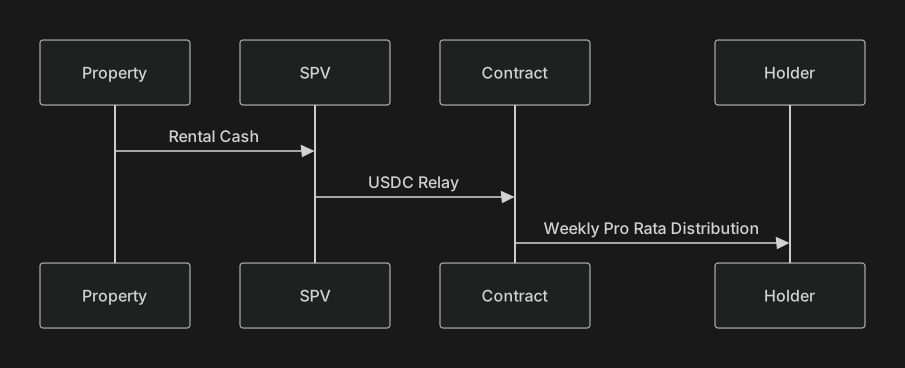
RealT tokenizes individual U.S. properties through LLC based SPVs, with each ERC 20 token representing a share in the corresponding LLC and carrying clear legal ownership rights. Rental income generated by the property is converted into USDC or DAI and distributed weekly to token holders through smart contracts.
Transfers are restricted to KYC compliant investors, and redemptions occur only when the SPV sells the underlying property, making liquidity dependent on real world market timelines. NAV is updated manually based on property appraisals rather than automated oracles.
Income distribution architecture:
Developer takeaways
Weekly distribution hooks offer a straightforward approach but can become costly at scale due to gas usage, so batching or aggregation patterns are recommended. The LLC structure provides strong legal enforceability, which is valuable for real estate backed assets, but developers should account for potential delays in redemption flows tied to property sales.
Securitize
What they tokenize?
- Private equity and venture funds
- Corporate bonds and other regulated securities
How Securitize works?
Securitize operates as a registered Alternative Trading System and transfer agent, issuing compliant tokenized securities primarily through the ERC 1400 standard on Ethereum and Polygon. These tokens include built in compliance features such as KYC and AML checks enforced through modular rulesets.
Off-chain, custody partners including institutions connected to DTCC safeguard the underlying securities. Assets are typically issued through SPVs, with legal agreements referenced via hashed identifiers. On-chain, transfer managers evaluate every attempted transaction by checking investor accreditation, jurisdiction requirements, and lockup periods before execution. Secondary market activity occurs on permissioned DEXs that support regulated assets. NAV data is sourced from institutional feeds such as Bloomberg, and redemptions require broker authorization.
Compliance enforcement:

Developer takeaways
ERC 1400 provides a mature framework for embedding compliance directly into token logic and is a strong foundation for permissioned RWA ecosystems. Securitize's fully integrated approach simplifies vendor management but concentrates sensitive KYC data, so security hardening and strict access controls are essential.
OpenEden
What they tokenize?
U.S. Treasury bills through the TBILL vault
How OpenEden works?
OpenEden allows users to deposit USDC into an ERC 4626 compliant vault, after which a dedicated SPV purchases U.S. Treasury bills held in regulated custody. The vault’s value is updated daily through verified NAV attestations, and yield is reflected through share price appreciation rather than rebasing.
Withdrawals follow an asynchronous settlement cycle, typically T plus 1 or T plus 2, depending on market conditions. Minting is restricted to whitelisted participants to ensure regulatory alignment, and Chainlink services support interoperability and data verification across networks.
Vault deposit and withdrawal flow:

Developer takeaways
The use of the ERC 4626 standard provides clarity, reduces audit overhead, and improves composability for any yield generating vault. Developers adopting similar designs should include timelocks or safeguards to handle settlement delays and mitigate risks associated with asynchronous redemption cycles.
Superstate
What they tokenize?
- Short term bond funds such as USTB
- Fixed income investment products
How Superstate works?
Superstate issues ERC 20 style tokens that represent shares in bankruptcy remote trusts holding short duration fixed income assets. NAV is updated continuously through oracle feeds, giving the token a clean, non rebasing structure that is easy to compose across DeFi.
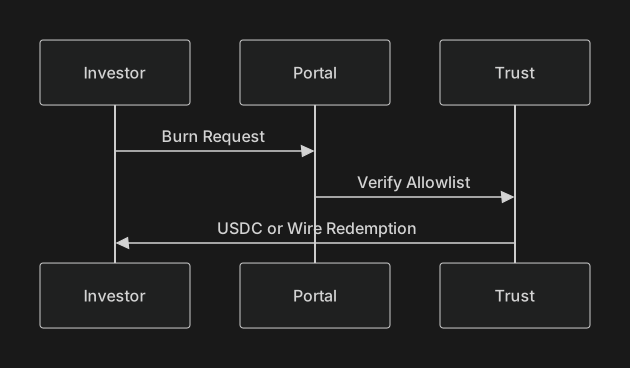
Transfers function like standard ERC 20 movements but remain subject to regulatory allowlists. Redemptions follow a mint burn pattern, where tokens are burned, and investors receive USDC or a wire transfer from the trust. Custody is fully segregated to maintain investor protection and regulatory clarity.
Redemption process:
Developer takeaways
Continuous NAV updates offer strong composability and reduce the complexity associated with rebasing assets. For regulated products, ensure allowlist checks are enforced on the server side or via pre transfer checks to maintain compliance.
Swarm Markets
What they tokenize?
- Stocks and ETFs
- Commodities such as gold
- Bonds and U.S. Treasury bills
How Swarm works?
Swarm Markets tokenizes traditional financial assets by issuing ERC 20 tokens that are fully backed by securities held with regulated custodians. Investors do not self custody the underlying assets, instead, Swarm handles acquisition and custody through its SwarmX infrastructure.
Trading takes place on a hybrid DEX where all participants are identity verified. Compliance is enforced through on chain rulesets, and secondary markets operate within a permissioned environment to meet regulatory requirements.
Asset backing flow:

Developer takeaways
Hybrid custody reduces direct asset management risk and simplifies regulatory alignment for tokenized public market assets. However, developers should implement reliable verification mechanisms and review custodian attestations on a regular basis to ensure ongoing asset backing integrity.
Tokeny (T-REX Network)
What they tokenize?
- Regulated equity and bond offerings
- Alternative and private market assets
How Tokeny works?
Tokeny uses the ERC 3643 standard to deliver fully compliant tokenized securities. The system relies on ONCHAINID for investor onboarding, identity verification, and accreditation checks. Issuances typically occur through SPVs, and all compliance rules are enforced before any token transfer takes place.
The platform is SOC 2 compliant, and the ERC 3643 validator framework ensures that every transaction meets regulatory requirements, covering KYC, jurisdictional limits, lockups, and investor eligibility.
Compliance check:

Developer takeaways
The modular compliance layers built into ERC 3643 are more flexible and maintainable than custom transfer hooks, making the standard a strong choice for any permissioned token. For production deployments, focus on optimizing identity and ruleset queries to control gas costs while maintaining robust compliance guarantees.
Chainlink CCIP and Proof of Reserve RWA Integrations
What they provide?
- NAV data feeds and reserve attestations for tokenized RWAs
- Cross chain verification and secure messaging
How it works?
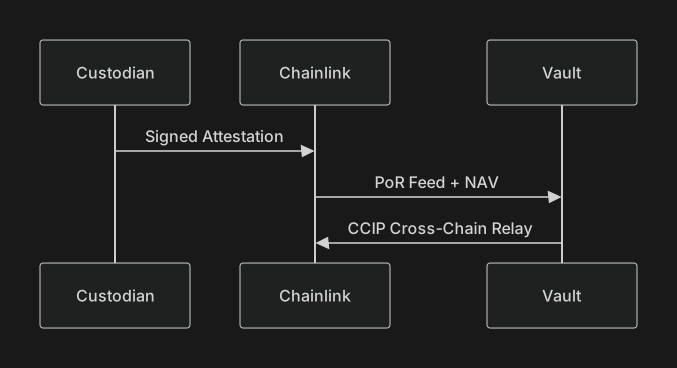
Custodians submit signed reserve or NAV attestations that Chainlink nodes aggregate and validate through Proof of Reserve feeds. These feeds ensure that on-chain token supplies remain aligned with the underlying assets. CCIP enables secure cross chain minting and redemption by relaying verified data across networks.
Circuit breakers automatically pause vault operations if any mismatch is detected between reported reserves and token supply. When integrated with yield vaults or 1 to 1 backed assets, PoR helps enforce strict collateralization, while CCIP provides a safer alternative to traditional bridges.
Integration flow:
Developer takeaways
Proof of Reserve is an essential safeguard for any collateral backed RWA system and should be treated as a required oracle layer rather than an optional feature. CCIP offers a reliable way to scale liquidity across chains without relying on conventional bridges, reducing attack surface while improving interoperability.
MakerDAO RWA Vaults
What they tokenize?
- U.S. Treasuries and bank loan portfolios
- Real estate backed assets and private credit
How Maker works?
MakerDAO integrates RWAs through specialized vaults that allow DAI to be minted against off chain collateral. SPVs acquire the underlying assets and issue legally enforceable claims to Maker. These claims are deposited into RWA vaults, where oracles provide NAV and income updates that feed into Maker’s surplus buffer and collateralization checks.
Governance retains final control over liquidations or adjustments, voting on actions if an RWA position becomes undercollateralized. Off chain, legal wrappers and structured agreements define enforceability. On chain, the Peg Stability Module supports stability and liquidity across DAI markets.
Vault minting flow:

Developer takeaways
Maker’s governance controlled approach provides a scalable model for incorporating RWAs into overcollateralized systems. It is well suited for stability oriented architectures, but developers must account for oracle disputes and the slower decision cycles introduced by on chain governance.
Provenance
What they tokenize?
- Private credit instruments
- Asset backed securities and real estate debt
How Provenance works?
Provenance is a Cosmos SDK based Layer 1 designed specifically for institutional asset tokenization. KYC verified institutions create tokenized representations of credit and structured products through SPVs, with all ownership and settlement records written directly to the chain.
On-chain tokens include embedded compliance layers that enforce transfer rules and maintain clear auditability. Attestations ensure that movements of the underlying assets remain synchronized with their tokenized equivalents. The network is built to integrate cleanly with traditional financial infrastructure, enabling streamlined interactions between blockchain and established capital markets.
Ownership tracking flow:

Developer takeaways
Provenance’s L1 native design is well suited for high volume credit and securitization flows, offering predictable settlement and transparent ownership tracking. For builders in the Cosmos ecosystem, adding IBC connectivity can greatly expand interoperability. Be mindful, however, that gas usage on Cosmos based chains can fluctuate during periods of heavy institutional activity.