Standards
ERC7943 Universal Real World Asset Interface
ERC7943, the universal RWA interface for consistent tokenization, smoother protocol communication & scalable real-world asset deployment.
ERC7943, also called uRWA (Universal Real World Asset Interface), is a simple standard made for tokenized real-world assets, things like securities, real estate, commodities, or other physical/financial assets represented on-chain. It builds on familiar token standards like ERC20, ERC721, and ERC1155, but adds the missing pieces that RWAs actually need, such as the ability to freeze tokens, force transfers when required by law, or restrict actions to verified users. Because it uses ERC165, DeFi protocols can easily recognize and work with any uRWA token without adding special custom logic.
This standard is to cover the regulatory and compliance requirements that normal ERCs don’t handle. RWAs often need features like allowlists, transfer controls, and freeze functions for KYC/AML and regional regulations, which the basic ERCs simply never included. ERC7943 provides a lightweight, flexible version of these rules without being overly complicated. It’s designed to work with different legal frameworks (like SEC Reg S or EU MiCA) and avoids being too opinionated. Introduced in June 2025, it improves on earlier standards like ERC3643 and ERC7518 by offering the same compliance logic with much lower gas costs and full backward compatibility.
The tokenization of real world assets is becoming a structural pillar of modern capital markets. As regulatory clarity increases and infrastructure matures, institutions are moving from experimentation to deployment. he industry is shifting from isolated pilots to integrated market infrastructure, driven by demand for transparency, efficiency, and programmable financial instruments. The next decade will be defined by platforms that can meet institutional requirements for compliance, scalability, and cross-chain operability, ultimately enabling tokenization to become a mainstream mechanism for issuing and managing assets.
Use of ERC7943 in RWA Projects
ERC7943 basically gives real-world asset (RWA) tokens the compliance features they actually need. It adds built-in checks and controls so assets can be owned, traded, and integrated into DeFi safely, without allowing transfers that break regulations. Instead of baking compliance rules directly into the token code, it separates them out, letting issuers connect things like oracles, Merkle proofs, or allowlists. This makes it flexible enough for assets that aren’t very liquid, such as private credit or real estate.
Key Ways It’s Used in RWA Development
- Compliance-Aware Tokenization You can tokenize assets like bonds or even NFTs representing art, and use
canTransferchecks to make sure only approved investors can receive them. Tokens can also be frozen for AML/KYC issues, and if required legally, aforcedTransfercan move tokens under court orders.
- Controlled Secondary Markets & Liquidity On RWA DEXs,
canTransactensures that only accredited users can trade. UIs can show users which tokens are frozen usinggetFrozenTokens. It also helps cross-chain bridges verify compliance before relaying transfers.
- Admin Controls & Recovery Issuers can temporarily freeze tokens during audits using
setFrozenTokens, or block transfers if balances look suspicious. It integrates smoothly with yield vaults (ERC4626), where withdrawals only account for unfrozen balances.
- Modular Compliance Across Jurisdictions The standard can work with Chainlink oracles for real-time KYC/AML updates, and supports country-based restrictions (like geo-fencing). It also plays nicely with async settlement flows such as ERC7540.
Developer Advantages in RWA Builds
- Efficient & Gas-Light: Checks like
canTransferare cheap to call and don’t revert, making them great for front-end simulations and routing decisions.
- Easy to Integrate: Because protocols can detect ERC7943 using ERC165, nothing extra needs to be registered, unlike older standards like ERC3643.
- Customizable: Hooks let you plug in custom proofs or rules, and multicall makes managing large RWA pools easier.
- Audit-Friendly: It has a small and clean surface area, lowering the chance of bugs. Custom errors make debugging straightforward.
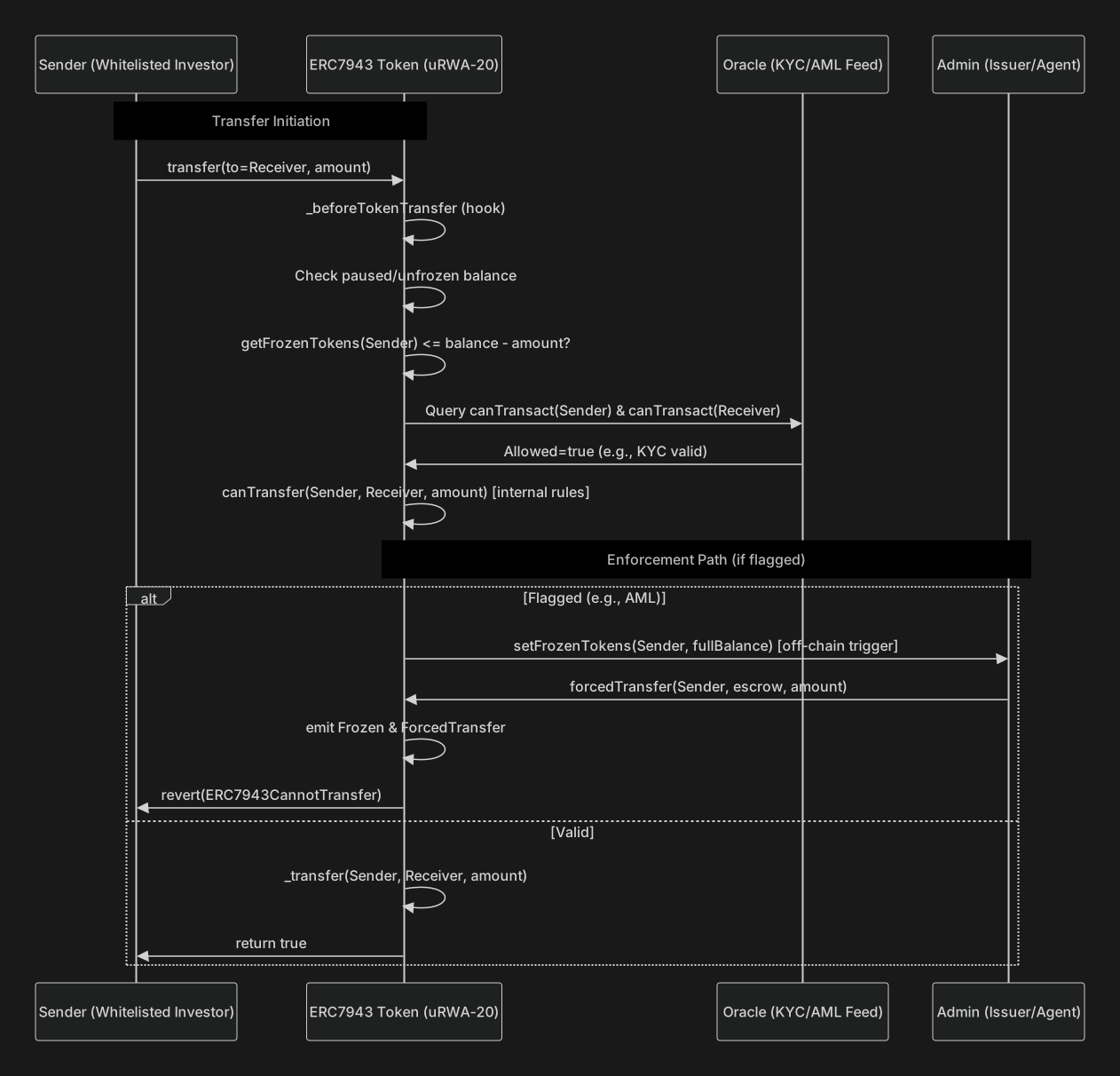
The sequence diagram below illustrates how a compliant transfer works for an RWA token (like tokenized shares). It walks through the full flow from when the transfer starts to when it’s executed, showing how freeze checks, eligibility checks, and other compliance rules are enforced through hooks.
Core Specification
ERC7943 tokens must implement one of the three interfaces, Fungible, NonFungible, or MultiToken, alongside their base ERC (20/721/1155). These tokens override the standard transfer hooks so that every transfer automatically passes through compliance checks. If canTransfer or canTransact fails, the transfer simply reverts. Mints and burns also follow eligibility rules unless the issuer has special permissions. All view functions are lightweight, never revert, and don’t depend on execution context, making them cheap to call.
Key concepts:
- Frozen Tokens: Tokens or balances that are locked from transferring. A freeze can even exceed the current balance to block future mints.
- Can Transact: Checks whether an account is allowed to interact at all (for example, KYC verified, not blacklisted).
- Can Transfer: Checks for conditions tied to a specific transfer, like available unfrozen balance, allowlist requirements, or transfer-speed limits.
- Forced Transfer: A privileged action that lets an authorized entity move tokens even when users normally can’t (e.g., court-ordered seizures).
- Authorization: Left to the implementer, typically done with something like
onlyOwneror AccessControl roles.
Support for the standard is announced through ERC165 using these interface IDs:
0x29388973for Fungible0xa8fdc849for NonFungible0x5627c61afor MultiToken
The standard introduces three interfaces. Below are their full ABI-compliant definitions from the EIP, along with developer notes explaining how each one applies to real-world asset use cases.
IERC7943Fungible (ERC20 Extension)
1interface IERC7943Fungible is IERC165 {
2    event ForcedTransfer(address indexed from, address indexed to, uint256 amount);
3    event Frozen(address indexed account, uint256 amount);
4
5    error ERC7943CannotTransact(address account);
6    error ERC7943CannotTransfer(address from, address to, uint256 amount);
7    error ERC7943InsufficientUnfrozenBalance(address account, uint256 amount, uint256 unfrozen);
8
9    function forcedTransfer(address from, address to, uint256 amount) external returns (bool result);
10    function setFrozenTokens(address account, uint256 amount) external returns (bool result);
11    function canTransact(address account) external view returns (bool allowed);
12    function getFrozenTokens(address account) external view returns (uint256 amount);
13    function canTransfer(address from, address to, uint256 amount) external view returns (bool allowed);
14}
IERC7943NonFungible (ERC721 Extension)
1interface IERC7943NonFungible is IERC165 {
2    event ForcedTransfer(address indexed from, address indexed to, uint256 indexed tokenId);
3    event Frozen(address indexed account, uint256 indexed tokenId, bool indexed frozenStatus);
4
5    error ERC7943CannotTransact(address account);
6    error ERC7943CannotTransfer(address from, address to, uint256 tokenId);
7    error ERC7943InsufficientUnfrozenBalance(address account, uint256 tokenId);
8
9    function forcedTransfer(address from, address to, uint256 tokenId) external returns (bool result);
10    function setFrozenTokens(address account, uint256 tokenId, bool frozenStatus) external returns (bool result);
11    function canTransact(address account) external view returns (bool allowed);
12    function getFrozenTokens(address account, uint256 tokenId) external view returns (bool frozenStatus);
13    function canTransfer(address from, address to, uint256 tokenId) external view returns (bool allowed);
14}
IERC7943MultiToken (ERC1155 Extension)
1interface IERC7943MultiToken is IERC165 {
2    event ForcedTransfer(address indexed from, address indexed to, uint256 indexed tokenId, uint256 amount);
3    event Frozen(address indexed account, uint256 indexed tokenId, uint256 amount);
4
5    error ERC7943CannotTransact(address account);
6    error ERC7943CannotTransfer(address from, address to, uint256 tokenId, uint256 amount);
7    error ERC7943InsufficientUnfrozenBalance(address account, uint256 tokenId, uint256 amount, uint256 unfrozen);
8
9    function forcedTransfer(address from, address to, uint256 tokenId, uint256 amount) external returns (bool result);
10    function setFrozenTokens(address account, uint256 tokenId, uint256 amount) external returns (bool result);
11    function canTransact(address account) external view returns (bool allowed);
12    function getFrozenTokens(address account, uint256 tokenId) external view returns (uint256 amount);
13    function canTransfer(address from, address to, uint256 tokenId, uint256 amount) external view returns (bool allowed);
14}
Detailed Function Breakdown
forcedTransfer(address from, address to, uint256 amount/tokenId) external returns (bool) Allows an authorized party to move tokens even when normal checks would block it, while still making sure the recipient passes canTransact. It updates balances and emits both the standard transfer event and the ForcedTransfer event. In RWA use cases, this enables regulatory actions such as court-ordered seizures or compliance-driven transfers, and should always be protected by multisig or strong admin controls.
setFrozenTokens(address account, uint256 amount/tokenId, bool frozenStatus) external returns (bool) Sets or updates the frozen status for a user’s tokens and emits a Frozen event. The frozen amount can be larger than the current balance, which helps block future mints. In RWA contexts, this is useful for locking positions during disputes, audits, or compliance reviews, and for over-freezing to prevent unwanted inflows.
canTransact(address account) external view returns (bool) Checks if an account is eligible to transact, without reverting. In RWA systems, this often maps to KYC and AML checks, such as verifying an oracle-provided status or blocking users from restricted jurisdictions.
getFrozenTokens(address account, uint256 tokenId) external view returns (uint256/bool) Returns the frozen amount or frozen status of a user’s tokens, again without reverting. For RWAs, this is valuable for investor dashboards and apps that need to show lockup periods or restricted positions in real time.
canTransfer(address from, address to, uint256 amount/tokenId) external view returns (bool) Validates whether a specific transfer is allowed, checking things like unfrozen balance, eligibility of both accounts, and any policy rules. It never reverts and is meant for quick compliance simulation. In RWA designs, it can enforce rules like investor caps, transfer velocity limits, or allowlist inclusion through Merkle proofs.
Reference Implementation
Reference implementations are educational Solidity contracts in the EIP assets: uRWA20.sol, uRWA721.sol, uRWA1155.sol. They extend OpenZeppelin bases with whitelists, roles, and Merkle/oracle compliance.
Constructor and Setup (uRWA20.sol Excerpt)
1import "@openzeppelin/contracts/token/ERC20/ERC20.sol";
2import "@openzeppelin/contracts/utils/introspection/ERC165.sol";
3import "./IERC7943Fungible.sol";
4
5contract uRWA20 is ERC20, ERC165, IERC7943Fungible {
6    mapping(address => uint256) private _frozenTokens;
7    mapping(address => bool) private _whitelisted;  // Example allowlist
8
9    constructor(string memory name, string memory symbol) ERC20(name, symbol) {}
10
11    function supportsInterface(bytes4 interfaceId) public view virtual override(ERC165, IERC165) returns (bool) {
12        return super.supportsInterface(interfaceId) || interfaceId == type(IERC7943Fungible).interfaceId;
13    }
14}
This setup uses OpenZeppelin’s ERC20 and ERC165 as the foundation, then layers in the uRWA interface. In a real RWA build, you would also add proper role management with something like AccessControl for secure admin operations.
Key Functions
canTransfer, the compliance hook:
1function canTransfer(address from, address to, uint256 amount) external view override returns (bool) {
2    if (!_whitelisted[from] || !_whitelisted[to]) return false;
3    uint256 unfrozen = balanceOf(from) - _frozenTokens[from];
4    if (amount > unfrozen) return false;
5    // Oracle/Merkle checks here
6    return true;
7}
This function checks both parties against a whitelist, verifies the sender has enough unfrozen balance, and leaves space for oracle or Merkle-based compliance logic. In RWA implementations, this is where you would plug in something like a Chainlink oracle to keep KYC data up to date.
_beforeTokenTransfer , where enforcement actually happens:
1function _beforeTokenTransfer(address from, address to, uint256 amount) internal virtual override {
2    require(canTransact(from) && canTransact(to), ERC7943CannotTransact(from));  // Or to
3    require(canTransfer(from, to, amount), ERC7943CannotTransfer(from, to, amount));
4    super._beforeTokenTransfer(from, to, amount);
5}
This hook ensures every mint, burn, and transfer goes through compliance. For RWAs, you typically extend this check across the entire token lifecycle, not just transfers.
forcedTransfer , the privileged movement path:
1function forcedTransfer(address from, address to, uint256 amount) external override onlyOwner returns (bool) {
2    require(canTransact(to), ERC7943CannotTransact(to));
3    _transfer(from, to, amount);
4    emit ForcedTransfer(from, to, amount);
5    return true;
6}
This lets an authorized role move tokens even when the normal rules would block it, while still validating the recipient. It should be used sparingly and always leave an audit trail with events.
setFrozenTokens , for lockups and freezes:
1function setFrozenTokens(address account, uint256 amount) external override onlyOwner returns (bool) {
2    _frozenTokens[account] = amount;
3    emit Frozen(account, amount);
4    return true;
5}
This function updates how many tokens an account is allowed to move. Freezes are common in RWAs for audits, disputes, KYC flags, or regulatory holds.
Security Considerations
ERC7943 keeps the design simple, which helps reduce the overall attack surface, but it also concentrates a lot of authority in admin-controlled functions. The EIP highlights risks such as front-running and reentrancy, and audits of reference implementations show that roughly a quarter of issues tend to arise inside transfer hooks. Because RWAs often represent high-value assets, threats like oracle manipulation become even more serious.
Admin Compromise (ForcedTransfer and SetFrozenTokens)
If an attacker gains admin access, they can freeze user balances or force-transfer tokens, effectively draining or locking real-world assets. Mitigation includes using multisigs or timelocks, separating admin roles so no single actor controls enforcement, and applying legal wrappers for sensitive RWA actions.
Front-Running and Race Conditions
A user could try to move assets right before a freeze is applied, or compliance checks might rely on stale view results during high-activity periods. Mitigation includes using over-balance freezes, applying delta-based updates with expected previous state checks, and using ReentrancyGuard within hook logic where appropriate.
Oracle or Logic Manipulation
If canTransact relies on an oracle or off-chain feed, attackers may try to manipulate the source data to bypass allowlists or regulatory checks. Mitigation includes using TWAP-style oracle protections, fuzzing custom compliance logic, and avoiding complex or state-changing behavior inside view functions.
ERC165 Misconfiguration
Improperly implemented interface IDs can cause protocols to mis-detect support, leading to skipped compliance checks or incorrect integration behavior. Mitigation includes thorough testing of supportsInterface and verifying the correct interface variant.
Reentrancy Within Hooks
If _beforeTokenTransfer triggers external calls, it can open the door to reentrancy-based exploits. Mitigation includes following the checks-effects-interactions pattern and isolating compliance logic from external calls.