Developer Foundation
Chains Built for RWA's
Explore the top blockchains built for real-world assets, designed for compliance, scalability, security and seamless on-chain asset tokenization.
Real-world asset tokenization isn’t just about putting assets on-chain, it requires infrastructure purpose-built for regulation, security, interoperability, and institutional trust. Generic blockchains rarely meet these needs on their own, which is why a new class of RWA-native chains has emerged. These networks embed compliance, privacy controls, identity frameworks, legal enforceability, and enterprise-grade performance directly at the protocol layer, enabling RWAs to be issued, managed, traded, and settled in a way that aligns with real financial markets. This section explores leading RWA-focused chains, how they’re architected, what technical properties make them credible, and why they’re shaping the future of on-chain finance.
Choosing a chain rarely happens in isolation, it's usually paired with an asset class, a token standard, and a compliance model. If you want a guided path through all four instead of working through the comparison below, Tokenization 101 walks you from asset class to chain to standard to regulatory mapping, backed by live market data.
Plume Network
Plume Network is a modular Layer 2 blockchain built on the Arbitrum Orbit stack, designed specifically for the evolving world of Real-World Asset finance. Settling on Ethereum, it focuses on making RWA tokenization smoother, safer, and easier to build with. Instead of leaving compliance and asset onboarding as external challenges, Plume brings tokenization rails and trusted compliance partners directly into the chain. This allows builders to onboard assets like private credit, commodities, treasuries, and even more unique real-world assets such as GPUs, carbon credits, or mineral rights, without wrestling with fragmented infrastructure.
The ecosystem has grown rapidly, attracting strong builder activity and meaningful institutional interest. Plume runs in an EVM-compatible environment, making it familiar for developers while supporting seamless bridging and asset mobility. It also supports initiatives that help teams build confidently, including support for security audits, grants, and ecosystem growth.
As an optimistic rollup powered by Arbitrum Orbit, Plume benefits from Ethereum’s security while delivering efficient execution tailored for RWA operations. Its design reduces friction for issuers and institutions by embedding compliance features like KYC/AML and support for regulated token standards. This makes RWAs not just tokenized, but truly usable in DeFi, unlocking use cases like lending, staking, collateralization, and structured yield products across chains.
In short, Plume Network isn’t just another L2. It’s purpose-built infrastructure for serious RWA builders who want trustworthy security, real compliance, and a chain that actually understands how real-world assets work.
Major Technical Properties and Why They Matter for RWAs
Plume is designed deliberately for real-world assets, not as a generic L2. Below is a simplified, developer-friendly breakdown of its core properties, what they are, how they work, and why they actually matter for compliant, scalable RWA deployment.
| Property | What It Is | How It Works | Why It Matters for RWAs |
|---|---|---|---|
| Architecture | A modular optimistic rollup on Arbitrum Orbit, settling on Ethereum. | Uses Arbitrum Nitro for execution, batches transactions to Ethereum for finality, and supports a roughly 7-day fraud proof window as standard with optimistic rollups. | Modular design makes it easier to plug in compliance partners directly, which is crucial for onboarding regulated RWAs. It has already supported tokenization worth over $150M at launch and is built to scale institutional-grade assets like treasuries and private credit. |
| Consensus & Security Base | Security inherited from Ethereum PoS via Arbitrum. | Fraud proofs are verified on Ethereum, and decentralization of sequencers is planned as the network matures. Ethereum secures the system with its large staked value base. | Ideal for high-value RWAs and institutional players handling pipelines reportedly exceeding $4B, where strong settlement guarantees matter for redemption, dispute resolution, and legal assurance. |
| Virtual Machine (VM) | Fully EVM-compatible environment. | Built on Arbitrum Nitro, supports Solidity, standard ERC tokens, and familiar tooling like Hardhat and Foundry. | Developers don’t need to learn a new stack. Compliance-friendly token standards like ERC-3643-style securities tokens can be deployed easily, while still enabling composability in DeFi. |
| Scalability & Performance | Designed to maintain low fees while supporting meaningful throughput. | Orbit compression improves cost efficiency. Public stats show tens of millions of transactions processed and well over a hundred thousand users onboarded. | Supports RWA ecosystems at real scale , from frequent interest distributions to fractional trading , and has grown from 50+ protocols at launch to 200+ today, without congestion issues becoming a bottleneck. |
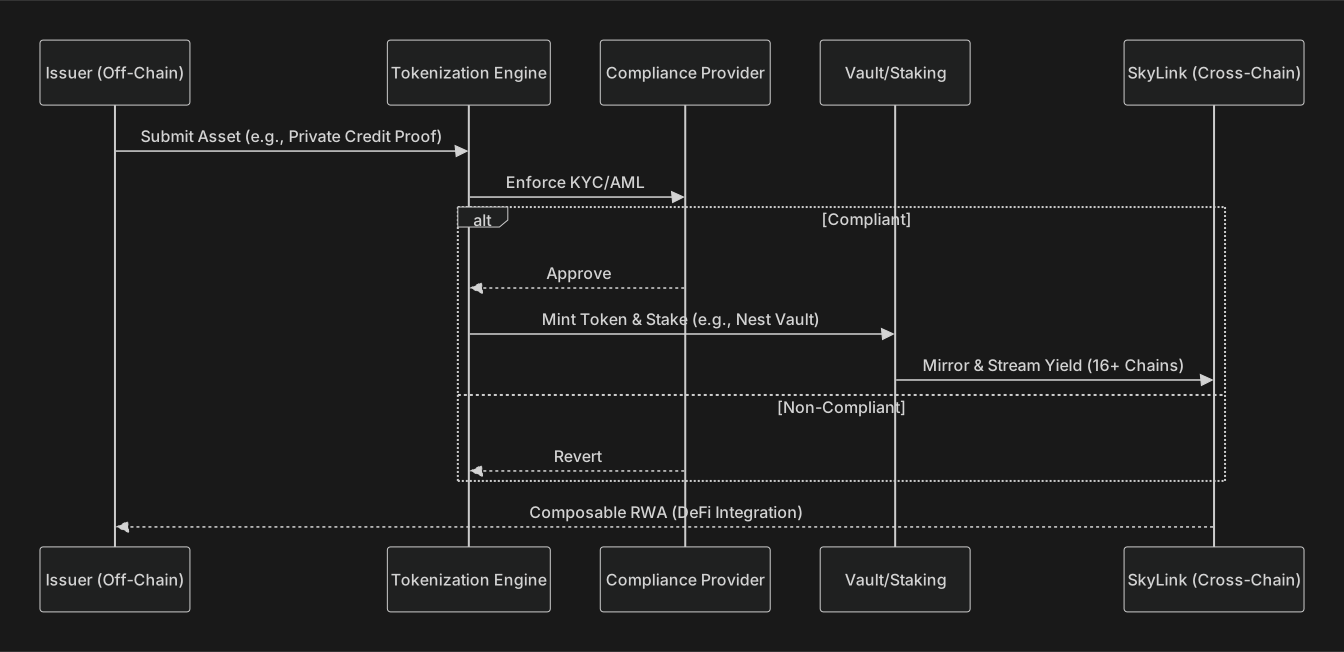
| RWA-Native Primitives | Infrastructure purpose-built for tokenization, yield, and compliance. | Includes an end-to-end tokenization framework, SkyLink for cross-chain yield across 16+ networks, and Nest vaults for staking. | Makes RWAs actually usable in DeFi , not just tokenized. Examples include private credit vaults (like Clearpool-style structures) and cross-chain yield streaming that’s relevant in the $13B+ and growing RWA sector. |
| Security & Governance | Third-party audited and backed by Ethereum security. | Audited by Trail of Bits, runs bug bounties, and supports staking-based governance via the $PLUME token. Force-inclusion mitigates sequencer centralization risks. | Institutional assurance matters. Compliance elements like transfer agents and regulated frameworks make it friendlier for U.S. and global financial environments. |
| Interoperability & Tooling | Built for builders, not just chains. | SkyLink uses LayerZero for connectivity with 16+ chains, SDKs exist for JS/Go/Rust, APIs are available, Blockscout powers the explorer, and there’s a $25M ecosystem fund to support builders. | RWAs shouldn’t get trapped on one chain. Cross-chain yield, liquidity distribution, and dev tooling ensure RWAs remain composable, proven by the 200+ protocols already building on Plume. |
Plume is positioning itself as a serious RWA hub, balancing Ethereum-level security, compliance-ready infrastructure, and developer-friendly performance. The trade-off of relying on Ethereum finality (including the standard optimistic rollup challenge period) is offset by stability, regulatory alignment, and the ability to support real institutional asset flows rather than just speculative tokens.
High-Level Architecture Flow
This diagram shows Plume's L2 stack, tx batching, fraud proofs, and Ethereum settlement.

RWA Tokenization Lifecycle
Step-by-step for issuing an RWA, based on end-to-end engine.
Canton Network
Canton Network is a privacy-enabled blockchain network designed specifically for regulated real-world assets, offering a balance of transparency, privacy, and control that traditional institutions require. Instead of forcing financial systems into a fully public setting, Canton provides configurable privacy and policy enforcement so institutions can operate safely and compliantly.
Built on privacy-preserving infrastructure and using the Daml smart contract language, Canton enables secure, private contract execution while still allowing applications to synchronize and interact when needed. This creates a connected “network of networks,” where independent systems coordinate seamlessly without sacrificing confidentiality.
Canton is already supporting large-scale institutional activity across treasuries, bonds, repo markets, and other regulated financial instruments. Its ecosystem includes major institutions like DTCC, Goldman Sachs, BNP Paribas, HSBC, Broadridge, Circle, and RedStone, all contributing to real, production-grade use cases.
Overall, Canton excels in tokenizing highly regulated real-world assets, such as bonds, repos, money market instruments, mortgages, and private equity, by enforcing compliance directly at the contract level while preserving privacy and operational control. It directly addresses the fragmentation challenge in institutional RWA tokenization and offers infrastructure built for organizations that demand trust, legal assurance, and privacy by design.
Major Technical Properties and Why They Matter for RWAs
Below is a simplified breakdown of Canton's core properties, drawn from official documentation and ecosystem material. Instead of being purely technical, this focuses on what things are, how they work in practice, and why they actually matter for real-world asset tokenization.
| Property | What It Is | How It Works | Why It Matters for RWAs |
|---|---|---|---|
| Architecture | A purpose-built Layer 1 chain designed as a privacy-first “network of networks.” | Uses subnet-style segmentation so applications can operate independently while still syncing when needed. A global synchronizer keeps everything consistent, while connectors help integrate custodians and financial venues. | Lets institutions keep control of their own environments while still interacting across systems. This is ideal for tokenized treasuries, repos, and enterprise-grade asset workflows where privacy and coordination must coexist. |
| Consensus Mechanism | A layered consensus approach built for institutional reliability. | Validation happens within subnets for efficiency while a broader synchronizer ensures network-wide consistency. Stake-based incentives support security and governance, especially for high-value financial activity. | Provides strong finality guarantees for regulated financial assets and prevents congestion from spilling across markets, unlike single-layer networks where everyone competes for block space. |
| Virtual Machine (VM) | Runs on the Daml smart contract language, designed around privacy and legal correctness. | Developers build with the Daml SDK, where contracts define rights, obligations, permissions, and disclosure rules at the protocol level. There’s no “gas-first” mindset, it’s built for workflows, not speculation. | Perfect for RWAs that require legal enforceability, investor restrictions, jurisdictional controls, and sensitive data handling, without exposing private information to public observers. |
| Scalability & Performance | Engineered for heavy institutional workloads rather than retail speculation. | Subnets scale horizontally, coordinated transactions settle atomically across applications, and batch processing helps support real-world collateral and trading operations. | Handles complex asset movements like collateral transfers, repo coordination, and institutional settlements, enabling smoother financing and fewer failed trade events. |
| RWA-Native Primitives | Built-in tools for compliance, privacy, asset policy enforcement, and financial workflows. | Supports features like programmable compliance rules, selective disclosure, standardized token formats, collateral management, lifecycle events, and integrations with AML/forensics tooling. | Makes it easier to tokenize bonds, funds, mortgages, repos, and private equity with compliance embedded directly into the contract layer, not bolted on afterward. |
| Security & Governance | Privacy by design with enterprise-grade security and structured governance. | Role-based permissions, immutable audit logs, secure key management, regulated custody alignment, and foundation-led governance ensure trust without sacrificing flexibility. “Break-glass” recovery paths exist for institutional safety. | Gives institutions confidence to tokenize sensitive financial instruments while still allowing regulators and auditors appropriate visibility. |
| Interoperability & Tooling | Built to connect with both on-chain and off-chain financial ecosystems. | Supports cross-chain options, bridges to public networks when needed, pricing and custody APIs, developer SDKs, wallet tooling, explorers, and ready-to-build templates. | Enables RWAs to move across networks, unlock financing against tokenized assets, and onboard builders faster, without sacrificing compliance or privacy. |
Canton is engineered specifically for institutional real-world assets, not speculative experimentation. Its privacy-first architecture, legal-grade smart contracts, subnet scalability, and governance structure make it one of the most credible infrastructures for regulated RWA tokenization today, with the main trade-off being a learning curve for Daml, which is offset by strong policy and compliance benefits.
High-Level Architecture Flow
This diagram depicts Canton's L1 with subnets: tx synchronization, Daml execution, and privacy enforcement.

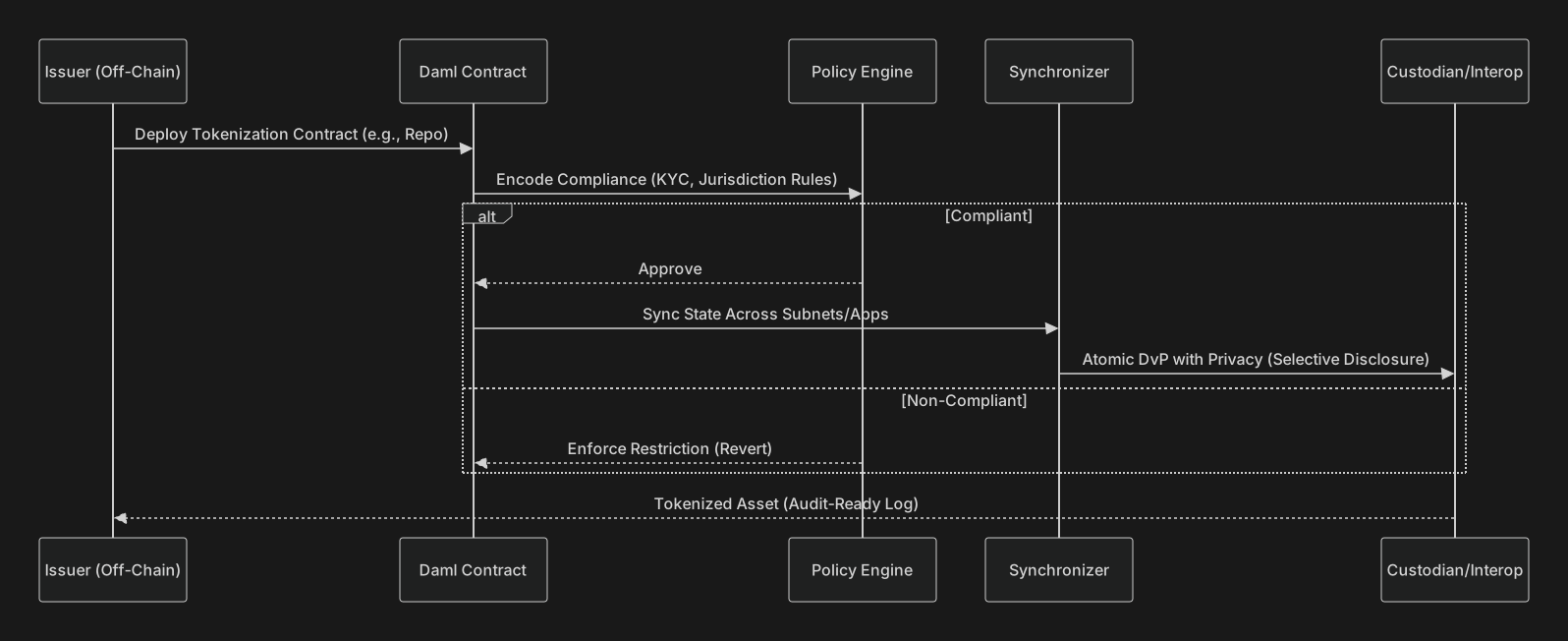
RWA Tokenization Lifecycle
Step-by-step for issuing a compliant RWA, emphasizing privacy/compliance.
Provenance Blockchain
Provenance Blockchain is a Layer 1 built on the Cosmos SDK and purpose-designed for financial real-world assets. Instead of being a general-purpose chain that later “supports RWAs,” Provenance was created specifically for things like private credit, mortgages, home equity lending, securitized debt, and institutional funding structures. It focuses on making financial asset tokenization practical, compliant, and deeply integrated with existing financial infrastructure.
Since mainnet launch, Provenance has grown into one of the most established ecosystems for institutional RWAs. It powers large-scale issuance, servicing, and lifecycle management of tokenized financial instruments while enabling capital markets activity on-chain. The network supports everything from loan origination and funding to secondary trading and structured financial products, with a strong emphasis on aligning with banking and regulatory environments rather than speculative activity.
Its ecosystem is built around serious financial players. Provenance has worked closely with large institutional partners, fintech lenders, asset originators, and infrastructure providers, driving adoption across lending, structured credit, and marketplace applications. Initiatives like the NUVA marketplace and collaborations with Figure Technologies help expand on-chain distribution, investor access, and DeFi integrations, while maintaining institutional compliance standards.
The native HASH token secures the network through proof-of-stake and supports transaction fees and governance, aligning incentives around long-term stability rather than short-term hype.
Overall, Provenance positions itself as one of the most mature, production-grade environments for financial RWAs today. It prioritizes compliance, interoperability, and capital efficiency, enabling lenders, asset managers, and institutions to move real assets on-chain, plug them into DeFi where appropriate, and unlock liquidity without compromising regulatory trust.
Major Technical Properties and Why They Matter for RWAs
Below is a practical breakdown of Provenance Blockchain’s core properties, based on official documentation and ecosystem material. Instead of listing raw specs only, this focuses on what they are, how they work in practice, and why they matter for real-world asset tokenization.
| Property | What It Is | How It Works | Why It Matters for RWAs |
|---|---|---|---|
| Architecture | A Cosmos SDK-based Layer 1 designed specifically for financial use cases. | Uses a modular design with purpose-built financial modules, account-based state, and strong auditability through cryptographic proofs. Deployment is straightforward with enterprise-friendly tooling. | Allows institutions to build dedicated modules for things like mortgages, credit products, and securitized assets without the complexity and noise of a general-purpose chain. |
| Consensus Mechanism | Runs on Tendermint Proof-of-Stake with Byzantine Fault Tolerance. | Validators secure the network, slashing ensures discipline, and delegation supports broader participation. Finality is fast and deterministic, built for financial reliability. | Provides confidence for regulated financial transactions where settlement certainty and operational trust are essential. |
| Virtual Machine (VM) | Uses CosmWasm for smart contracts, supporting Rust-based development with the option to bridge EVM ecosystems. | Contracts are efficient, structured, and resource-aware. Developers can build advanced financial logic such as structured credit and asset lifecycle management. | Enables complex RWA models, such as tranching, investor controls, and compliance policies, with strong performance and flexibility. |
| Scalability & Performance | Designed for sustained institutional workloads rather than speculative traffic spikes. | Tendermint optimizations, horizontal scaling through the Cosmos ecosystem, and consistent network reliability support demanding financial environments. | Handles heavy issuance periods, marketplace activity, and large asset bases without performance degradation, critical for large RWA ecosystems. |
| RWA-Native Primitives | Comes with native modules tailored for financial tokenization and compliance. | Includes asset issuance frameworks, compliance hooks for KYC/AML, oracle integrations for pricing and NAV, escrow tooling, and marketplace support. | Makes the entire RWA lifecycle smoother, from minting and compliance to trading, servicing, and redemption, without requiring custom patchwork solutions. |
| Security & Governance | Enterprise-aligned security with strong economic incentives and transparent governance. | On-chain governance, audited modules, slashing-based protection, multi-sig asset control, and forensic integrations help institutions trust the network. | Supports regulated financial environments where accountability, compliance, and resilience are critical. |
| Interoperability & Tooling | Deeply integrated into the Cosmos ecosystem with strong developer tooling. | Leverages IBC for cross-chain connectivity, supports SDKs in multiple languages, provides robust APIs, block explorers, dev tooling, and dedicated marketplace integrations. | Enables RWAs to interoperate across chains, plug into DeFi where appropriate, and accelerate time-to-market for institutional asset platforms. |
Provenance combines Cosmos modularity, institutional-grade security, and financial-focused design to power serious real-world asset ecosystems. It’s built for organizations that want compliance, reliability, and capital efficiency, with the only real trade-off being that Rust and CosmWasm introduce a learning curve, which is largely offset by strong tooling and ecosystem support.
High-Level Architecture Flow
This diagram outlines Provenance's Cosmos-based L1: tx validation, CosmWasm execution, and IBC sync.

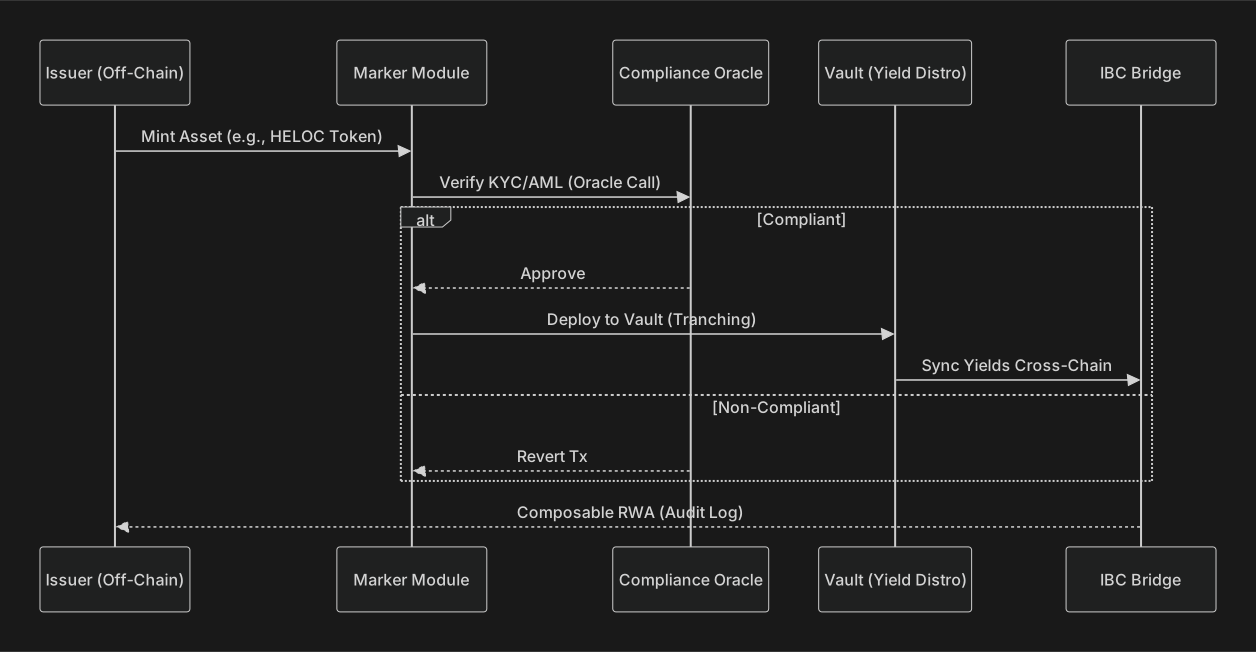
RWA Tokenization Lifecycle
Step-by-step for issuing a compliant RWA, focusing on modules.
MANTRA Chain
MANTRA Chain is a Cosmos SDK–based Layer 1 built specifically for real-world asset tokenization, with EVM compatibility and compliance at its core. Unlike general-purpose chains that later adapted to RWAs, MANTRA was designed from the beginning to support regulated asset environments. It integrates identity verification, compliance screening, and permissioned participation where needed, while still remaining permissionless and open for developers.
The chain focuses on institutional-grade asset classes like real estate, commodities, fine assets, private credit, and yield-bearing securities. It enables these assets to be tokenized, fractionalized, and plugged directly into DeFi, allowing both utility and liquidity while still staying aligned with legal and regulatory expectations.
MANTRA has positioned itself as a hub for serious RWA builders through strong partnerships across real estate, tokenization infrastructure, asset marketplaces, and institutional finance. Collaborations span everything from property and commodity tokenization to regulated investment platforms, developer infrastructure, banking alignment, and enterprise infrastructure providers, creating a full-stack RWA infrastructure rather than just a blockchain layer.
Its native OM token powers staking, governance, fees, and RWA vault functionality, while regulatory licensing in key jurisdictions helps bridge institutional confidence with on-chain innovation.
A major strength of MANTRA is its MultiVM approach, allowing seamless interaction between Cosmos and EVM ecosystems. This ensures developers can deploy familiar smart contract standards like ERC-3643 for securities, benefit from Cosmos interoperability, and enable compliant cross-chain yield and liquidity distribution.
Overall, MANTRA Chain positions itself as a practical, compliance-ready backbone for RWA tokenization, combining regulation-aware infrastructure, institutional partnerships, and technical flexibility to support the next wave of asset tokenization and on-chain financial innovation.
Major Technical Properties and Why They Matter for RWAs
Below is a practical breakdown of MANTRA Chain’s key properties, based on ecosystem documentation and public announcements. Rather than listing raw specs only, this explains what each capability is, how it works, and why it actually matters for real-world asset tokenization.
| Property | What It Is | How It Works | Why It Matters for RWAs |
|---|---|---|---|
| Architecture | A Cosmos SDK-based Layer 1 designed with modularity and permissionless deployment in mind. | Built on Tendermint with the ability to support both fully public environments and private or permissioned segments where regulation demands it. Deployment is enterprise-friendly with straightforward node setups. | Gives RWA platforms the flexibility to launch compliant asset environments without relying on expensive, congested public chains, ideal for real estate, institutional pipelines, and regulated issuance. |
| Consensus Mechanism | Tendermint Proof-of-Stake with strong Byzantine Fault Tolerance. | Validators secure the chain through staking and are subject to penalties if they misbehave or go offline, ensuring responsible participation and network resilience. | Provides fast, reliable finality, making it suitable for institutional-grade financial transactions where certainty, compliance, and predictable settlement are essential. |
| Virtual Machine (VM) | A MultiVM design supporting both EVM smart contracts and CosmWasm contracts. | Supports Solidity development while also enabling Rust-based WASM contracts, allowing builders to choose what fits their product best. | Lets teams leverage familiar Ethereum tooling for securities-grade tokens while still accessing Cosmos-native performance and functionality, enabling compliant, flexible RWA deployments across ecosystems. |
| Scalability & Performance | Built to handle sustained institutional workloads, not just DeFi hype cycles. | The Tendermint engine, combined with Cosmos architecture and future scaling enhancements, allows MANTRA to support large asset environments and continuous financial activity. | Supports high-volume tokenization, marketplace usage, and yield products without network slowdowns, critical for serious real-world asset platforms. |
| RWA-Native Primitives | Comes with built-in compliance and identity infrastructure tailored for regulated finance. | Includes decentralized identity features, compliance-ready vaults, oracle integrations, and straightforward tooling for token creation and fractionalization. | Makes regulatory alignment easier by enforcing KYC/AML and investor rules at the token level, reducing friction for institutional issuers and compliant yield platforms. |
| Security & Governance | Enterprise-aligned security backed by economic incentives, audits, and governance. | Uses on-chain governance powered by the OM token, third-party security assessments, multi-sig protections, and forensic integrations. Validator distribution improves over time through participation and delegation. | Provides the trust and accountability institutions need to put real assets on-chain while maintaining the ability to adapt governance to regulatory and market needs. |
| Interoperability & Tooling | Deep Cosmos interoperability with strong EVM connectivity and developer tooling. | Uses IBC for cross-chain movement, supports EVM bridges, offers SDKs across major languages, full API support, dev environments, explorers, and ecosystem tooling. | Enables RWAs to move across ecosystems, unlock liquidity, tap into DeFi when appropriate, and accelerate development timelines with strong builder support. |
MANTRA Chain blends Cosmos performance, EVM familiarity, and compliance-ready infrastructure into a chain built specifically for real-world assets. It’s engineered for regulated tokenization, enterprise trust, and cross-ecosystem liquidity, with the only real trade-off being the learning curve of operating in both Cosmos and EVM worlds, which is largely softened by tooling and ecosystem support.
High-Level Architecture Flow
This diagram shows MANTRA's Cosmos L1: tx validation, MultiVM execution, and IBC interoperability.

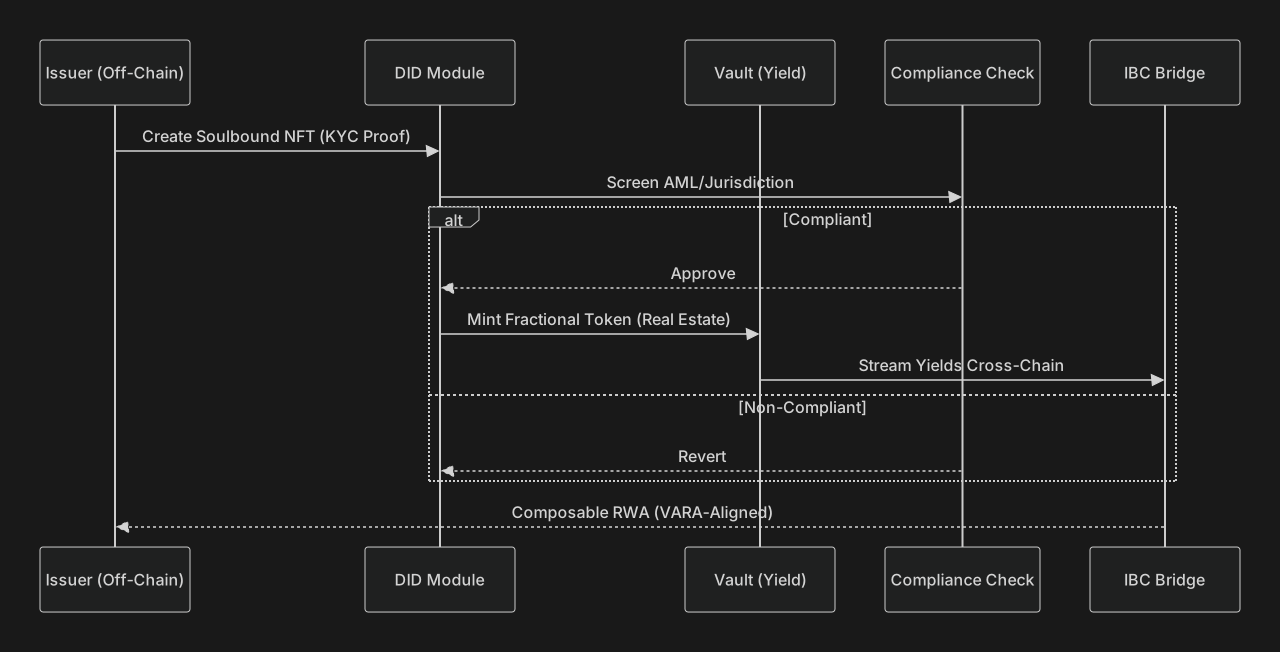
RWA Tokenization Lifecycle
Step-by-step for issuing a compliant RWA, highlighting primitives.
Intain
Intain is a permissioned Avalanche Evergreen Subnet purpose-built for institutional structured finance and tokenized asset-backed securities. Instead of being a general blockchain trying to “also support RWAs,” Intain focuses entirely on securitization workflows, covering issuance, trading, administration, servicing, and settlement on-chain. It is built for assets like mortgage-backed securities, commercial real estate loans, small business lending portfolios, and complex securitized financial products.
Intain originally launched as IntainMARKETS and has continued to evolve into a regulated, institutional-grade marketplace and infrastructure layer. It is designed to help banks, loan originators, trustees, paying agents, and institutional investors move structured finance processes on-chain in a compliant, transparent, and automated way. A major focus of the platform is reducing operational friction in securitization, cutting reliance on intermediaries, and enabling more frequent, data-driven loan pooling and capital market execution.
The network operates as a permissioned blockchain environment with verified validators, U.S.-compliant operational standards, and integrations with established financial infrastructure providers. Partnerships span core banking technology companies, trust banks, paying agents, and major financial institutions participating in structured finance markets. Rather than relying on speculative token economics, Intain is built as an enterprise-grade environment with compliance-first governance and no dependency on public token mechanics.
There is no native token on Intain, the economics are infrastructure-driven, not speculation-driven. This aligns the network squarely with regulated institutions that prioritize predictability, governance assurance, and operational control over token incentives.
Built on Avalanche’s subnet architecture, Intain benefits from high-speed execution and interoperability while retaining the ability to customize rules, permissions, and regulatory controls. It also integrates automation and data intelligence layers to streamline administration and reporting, supporting the broader movement toward on-chain capital markets infrastructure.
Major Technical Properties and Why They Matter for RWAs
Below is a practical breakdown of Intain’s core properties, based on Avalanche ecosystem material and official releases. Rather than listing only raw specifications, this explains what each capability is, how it actually works, and why it matters for real-world structured finance and asset-backed securities.
| Property | What It Is | How It Works | Why It Matters for RWAs |
|---|---|---|---|
| Architecture | A permissioned Avalanche Evergreen Subnet designed specifically for institutional structured finance networks. | Runs as its own dedicated blockchain environment with verified, U.S.-hosted validators and roles built around the securitization ecosystem, including issuers, trustees, paying agents, verification entities, and institutional investors. Supports hybrid setups where privacy, compliance, and transparency can be balanced. | Provides a controlled, legally-aligned environment for issuing and managing mortgage-backed securities, loan pools, and other asset-backed products, without exposing sensitive workflows to public blockchain risks. |
| Consensus Mechanism | Built on Avalanche’s fast, finality-focused consensus, optimized for enterprise reliability. | Validators are permissioned and verified, ensuring trusted participation. The network benefits from Avalanche’s PoS and consensus design to deliver predictable settlement and operational assurance. | Enables programmatic settlement of tokenized loans and structured financial transactions where delays and uncertainty are not acceptable. |
| Virtual Machine (VM) | An EVM-compatible environment tailored for compliant financial workflows. | Supports Solidity-based contracts and standard Ethereum tooling while allowing customization for regulatory checks, compliance enforcement, and tokenized securities logic. | Makes it easier for developers to build compliant ABS and structured credit systems using familiar EVM infrastructure, while still benefiting from Intain’s permissioned institutional framework. |
| Scalability & Performance | Designed for sustained institutional transaction volumes and capital markets workloads. | Subnet isolation ensures traffic is not competing with other chains, while Avalanche performance enhancements enable efficient batch processing, verification, and administration workflows. | Supports large securitization ecosystems, active marketplaces, and ongoing administration without congestion, critical for serious RWA programs. |
| RWA-Native Primitives | Built specifically for structured finance and ABS tokenization lifecycle management. | Includes marketplace capabilities, issuance and investment workflows, administration tooling, compliance-ready token standards, data validation layers, and automated servicing functions. Integrates directly with core banking and trust infrastructure. | Brings the full securitization process on-chain, reducing intermediaries, improving transparency, and enabling more frequent, controlled loan pooling and investment execution. |
| Security & Governance | Enterprise-grade security with governance aligned to regulated financial operations. | Uses verified validators, strong permissioning, data residency guarantees, third-party reviews, and institutional governance processes. Risk management considers centralization vs trust boundaries carefully. | Gives banks, trusts, and institutional finance players confidence to tokenize and manage sensitive securities while satisfying regulatory and audit expectations. |
| Interoperability & Tooling | Deep integration with Avalanche’s interoperability stack and enterprise developer tooling. | Supports Avalanche Warp Messaging for subnet communication, bridges to major ecosystems, SDKs for builders, APIs for banking integrations, dedicated testing environments, and ready-to-deploy subnet templates. | Allows tokenized structured assets to interact with broader ecosystems when appropriate while enabling institutions to build faster with production-ready infrastructure. |
Intain is engineered as a purpose-built institutional subnet for structured finance, not a general-purpose chain. By combining Avalanche speed with permissioned governance, compliance alignment, workflow automation, and integration with real financial institutions, it provides serious infrastructure for tokenized ABS and loan-backed RWAs. The trade-off is reduced openness compared to public chains, but it delivers exactly what regulated institutions need: trust, control, and operational assurance.
High-Level Architecture Flow
This diagram illustrates Intain's Avalanche subnet: tx finality, EVM execution, and Warp interop.

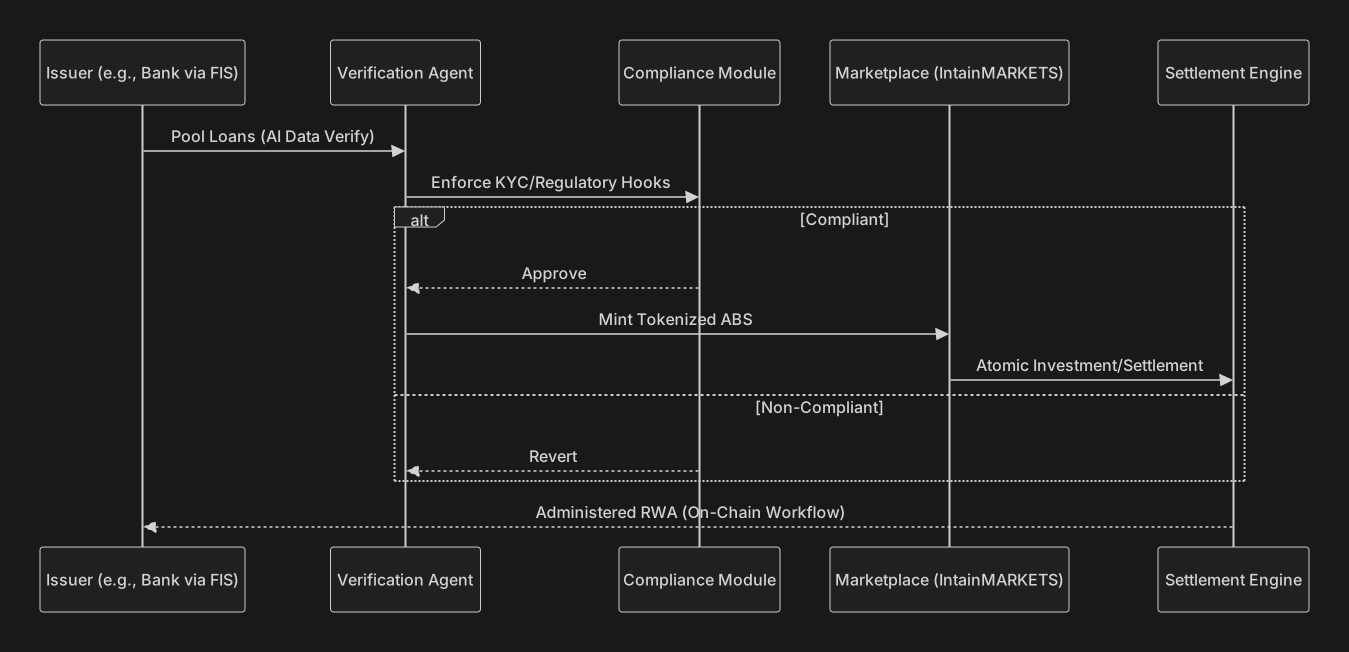
RWA Tokenization Lifecycle
Step-by-step for issuing a compliant ABS, emphasizing integrations.
Hedera Hashgraph
Hedera Hashgraph is built around its unique hashgraph consensus, delivering high throughput, strong security, and predictable performance for real-world asset tokenization. Instead of operating like a traditional blockchain, Hedera uses an asynchronous Byzantine Fault Tolerant consensus model, enabling fast, fair, and tamper-resistant transaction ordering, making it well suited for enterprise-grade financial assets.
Hedera has matured into a powerful platform for issuing and managing tokenized RWAs such as stablecoins, treasuries, real estate assets, commodities, and ESG-linked financial instruments. Its native token service and compliance-friendly frameworks help issuers adopt standards like ERC-3643, ensuring regulatory alignment while enabling token composability across DeFi and institutional environments.
Over time, Hedera has seen growing momentum in the RWA space through integrations with enterprise tokenization platforms, upgraded governance capabilities, and increased adoption of hedge-fund, institutional, and corporate tokenization use cases. The ecosystem has attracted major partnerships across finance and technology. Projects like Swarm enable tokenized securities and regulated asset issuance; Chainlink contributes oracle infrastructure for reliable valuation data; and enterprise partners such as Google Cloud and IBM help extend Hedera’s reach into corporate RWA environments.
HBAR powers the network through fees, staking, and service usage, while Hedera’s Council governance model, made up of globally recognized organizations, ensures operational stability, transparency, and institutional trust rather than speculative governance dynamics.
Major Technical Properties and Why They Matter for RWAs
Below is a practical breakdown of Hedera’s key properties, based on ecosystem documentation and public reports. Rather than just listing specs, this explains what each feature is, how it works, and why it actually matters for real-world asset tokenization.
| Property | What It Is | How It Works | Why It Matters for RWAs |
|---|---|---|---|
| Architecture | A public distributed ledger using Hedera’s unique hashgraph approach rather than a traditional blockchain. | Uses a gossip-based protocol, mirror and proxy nodes for data access, and EVM compatibility through a JSON-RPC relay. Governed under an open-source framework by the Hedera Council. | Provides an immutable, verifiable foundation for tokenized assets, with native support for asset metadata and strong compatibility with existing Ethereum tooling, ideal for enterprise tokenization platforms. |
| Consensus Mechanism | Asynchronous Byzantine Fault Tolerant consensus with proof-of-stake security. | Transactions achieve finality without forking, using weighted staking and a leaderless validation design operated by trusted council entities. | Ensures highly reliable ordering, fairness, and auditability, crucial for regulated RWAs such as treasuries, funds, and institutional securities that demand consistent, provable event history. |
| Virtual Machine (VM) | Fully EVM-compatible smart contract execution through the Hedera Smart Contract Service. | Supports Solidity contracts, Ethereum dev tools, familiar standards, and a predictable fee model for contract execution. | Makes it easy to deploy securities-grade standards like ERC-3643 with compliance logic baked in, enabling transfer-restricted assets, regulated securities, and enterprise-friendly token structures. |
| Scalability & Performance | Architected for high throughput, predictable performance, and stable transaction costs. | Uses sharded services, efficient consensus, and mirror infrastructure to maintain performance reliability even under enterprise-scale activity. | Supports large-scale token issuance, frequent transfers, synchronized updates, and liquidity movements without congestion, critical for institutional RWA adoption. |
| RWA-Native Primitives | Native services built for tokenization and compliant financial workflows. | Includes Hedera Token Service for fungible and non-fungible assets, consensus timestamping for proof records, file services for metadata, and integrations with major oracle infrastructure. | Enables compliant RWA issuance with hooks for KYC, audit trails via timestamps, and seamless valuation feeds, supporting everything from tokenized stocks to cash-equivalent assets and ESG instruments. |
| Security & Governance | Enterprise-grade security with globally recognized council governance. | Uses a council of trusted organizations for governance oversight, audited infrastructure, strong validator trust models, and transparent policy evolution processes. | Gives institutions confidence that RWAs are backed by credible governance, predictable policy handling, and robust security guarantees aligned with regulatory expectations. |
| Interoperability & Tooling | Built to connect smoothly with Ethereum ecosystems and enterprise environments. | Provides JSON-RPC compatibility, Hedera Improvement Proposals for standards, SDKs across major languages, APIs, explorers, and deep oracle integrations. | Makes it easier for RWA builders to bridge assets, integrate with DeFi when appropriate, and accelerate development with strong tooling and compatibility support. |
Hedera combines strong performance, enterprise-grade governance, predictable costs, and regulatory-friendly capabilities to support real-world asset tokenization at scale. Its aBFT consensus, native tokenization services, and EVM compatibility make it a compelling platform for institutions bringing regulated assets, securities, and ESG-focused instruments on-chain, with reliability built directly into the protocol.
High-Level Architecture Flow
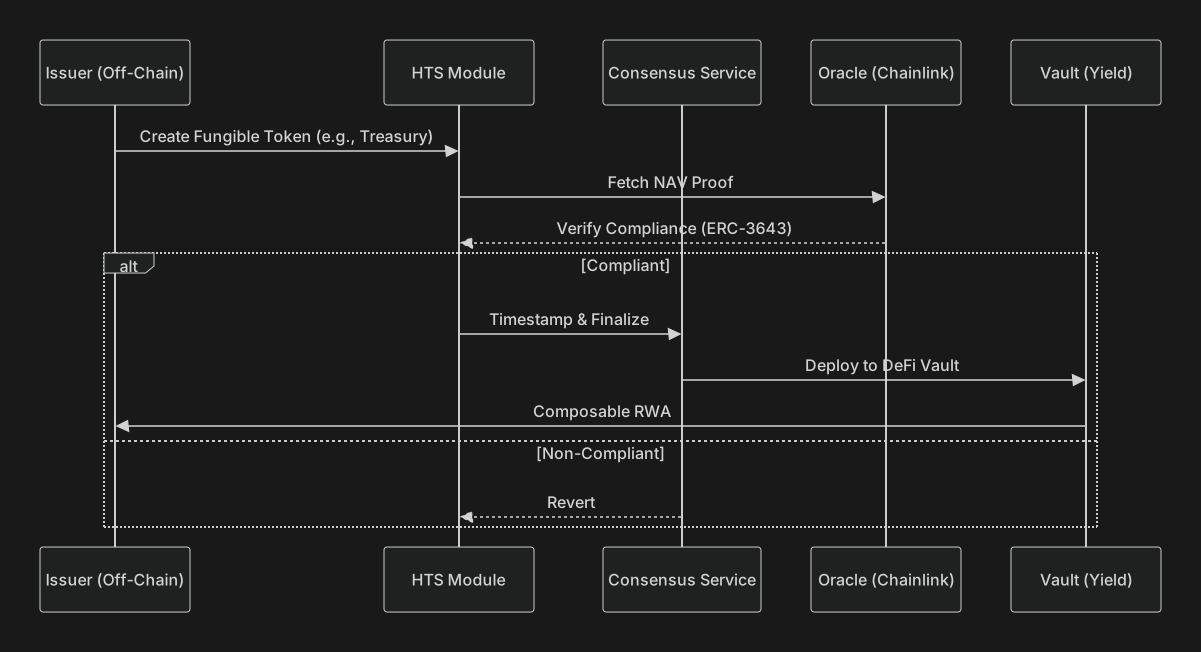
This diagram depicts Hedera's hashgraph DLT: tx gossip, aBFT consensus, and token services.

RWA Tokenization Lifecycle
Step-by-step for issuing a compliant RWA, emphasizing HTS.